Leo season asked you to perform, to shine, to take up space and be seen. It was warm, generous, and a little loud — the kind of energy that doesn’t ask permission. Now the Sun is moving into Virgo, and the mood changes completely. Virgo doesn’t care how good something looked under the spotlight. It wants to know if it actually works.
This is earth energy after fire — precision after performance. Virgo season is when we stop admiring the thing we built in Leo season and start asking the harder question: does it hold up? What needs adjusting? What did we overlook while we were busy being seen? It’s not a step down from Leo’s brightness — it’s what makes that brightness sustainable. Nothing lasts on charisma alone.
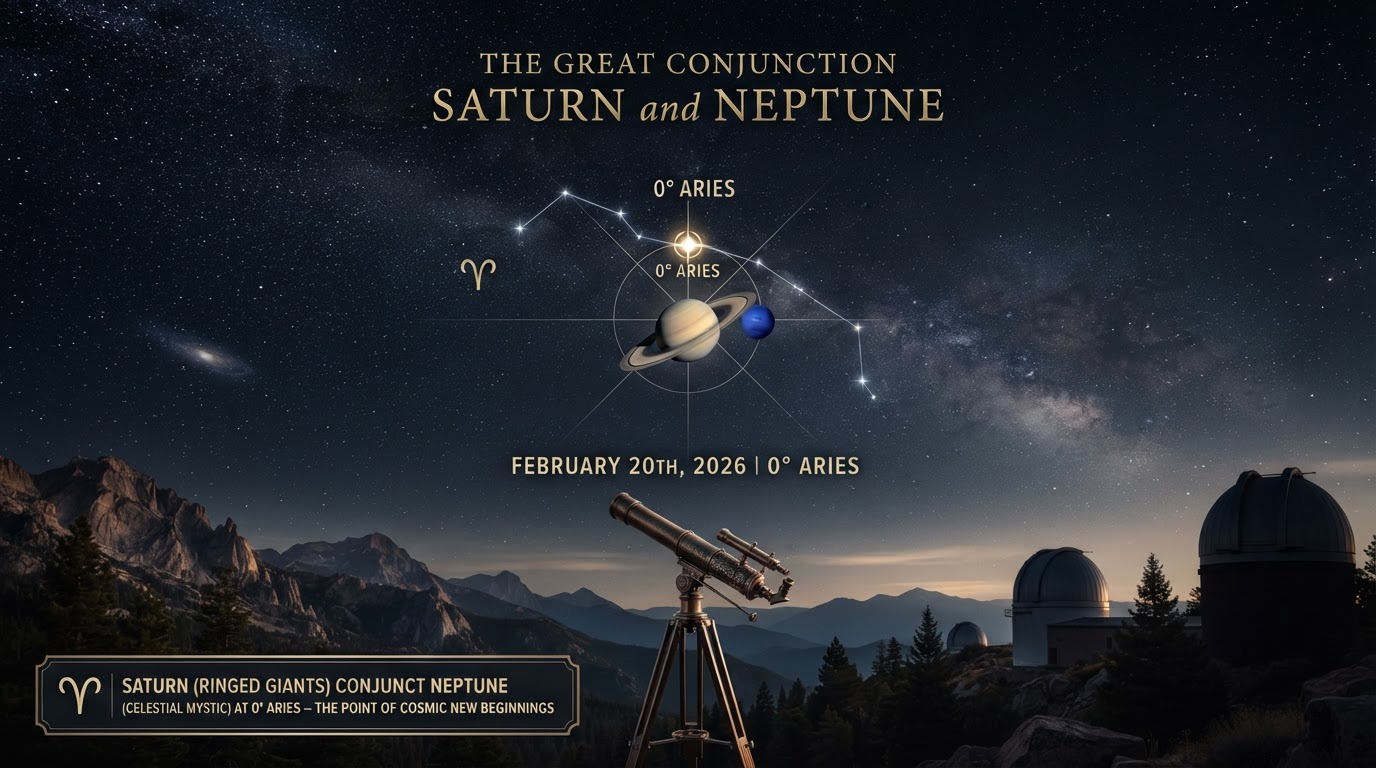
The Deeper Backdrop: Saturn Conjunct Neptune in Aries
Underneath this whole season sits something much bigger than a monthly mood shift. On February 20th, Saturn and Neptune met exactly at 0° Aries — the very first degree of the zodiac. These two only meet at all once every 36 years or so, and even that undersells how unusual this particular meeting was: most Saturn-Neptune conjunctions actually hit exactly three separate times, as the planets slow, station retrograde, and cross paths again before finally pulling apart for good — that’s what happened the last two times they met, in 1989 and in 1952–53. This one didn’t do that. Saturn and Neptune spent close to a year drawing together, met exactly once, cleanly, and that was it.
To actually feel what that means, it helps to know what these two planets do when they’re not sharing space. Saturn is the planet of consequence. It’s the real world doing what it does whether or not you’re ready for it — deadlines, aging, the bill that comes due, the structure that either holds weight or collapses under it. Saturn doesn’t care about your intentions. It cares about what you actually built and whether it’s load-bearing. Neptune is the opposite kind of force entirely — dissolution, longing, the boundless and the not-yet-real. It’s the planet of dreams, spiritual union, art, escapism, and the parts of life that resist measurement or proof. Neptune doesn’t build. It softens edges until they disappear.
Put those two together, and you get one of two things: either a spiritual vision finally given enough discipline and structure to become real — a calling that stops being a fantasy and starts being a life — or a structure that turns out to have been built on fog the whole time, and finally shows its cracks. Saturn conjunct Neptune has a long history of coinciding with both religious/spiritual movements gaining real institutional footing and with existing institutions or beliefs people trusted proving less solid than they looked. On a personal level, it tends to ask a very specific question: where in your life have you been disciplined about something you no longer believe in, and where have you been devoted to something you’ve never actually built real structure around? Both of those gaps tend to surface under this signature, whether or not the planets are making exact contact on a given day.
The fact that this happened at 0° Aries — the literal first degree of the entire zodiac, the starting point before anything else has been defined — adds another layer. This isn’t a conjunction happening somewhere in the middle of an established pattern. It’s happening at the very beginning of one, which is part of why it’s this rare: Saturn and Neptune move at different enough speeds that they rarely meet at all, and meeting exactly at zero degrees means whatever gets built or dissolved under this signature is genuinely foundational, not a tweak to something already in progress.
This isn’t the first time these two planets have lined up this precisely at the very start of Aries — it’s just been a very long time. Tracing it back, the closest matches cluster into a real, traceable pattern stretching across thousands of years of human history, and looking at a handful of them side by side makes the pattern land differently than any single number could:
699 CE
This falls right in the middle of the reign of Wu Zetian, the only woman ever to rule China as emperor in her own right. She built her entire claim to the throne on a Buddhist prophecy: a text commissioned by her court, the Great Cloud Sutra, foretold a female ruler who would relieve the world of suffering, and Wu had herself proclaimed a living incarnation of Maitreya, the bodhisattva-to-come. A spiritual vision, converted directly into the machinery of an actual empire — Saturn and Neptune, doing exactly what they do together, on one of the biggest stages history offers.
Around 1955 BCE
Early in the reign of Senusret I, a few decades into Egypt’s 12th Dynasty. His father, Amenemhat I, had founded that dynasty on the back of a text called the Prophecy of Neferti — a “prophecy” written after the fact, presenting his rise as the fulfillment of an ancient prediction, giving a very real political dynasty a manufactured mystical pedigree. Right around this window, Senusret I also began the first substantial stone temple at Karnak for the cult of Amun — a religious devotion that had existed for generations finally getting real, permanent architecture to back it up.
Around 628 BCE
This falls within the range scholars place the life of Zoroaster, founder of one of the world’s oldest continuously practiced religions — his exact dates aren’t settled in the historical record, but this era is one of the commonly cited windows, and it’s the same story again: a spiritual framework becoming a lasting institutional religion.
Around 7261 BCE
Thousands of years further back, in the Neolithic Levant. This falls within the long window — roughly 8000 to 6000 BCE — during which people in the region around Jericho practiced a striking form of ancestor veneration: skulls of the dead were exhumed, reconstructed with plaster into lifelike faces, and kept and displayed rather than buried. It’s about as literal a Saturn-Neptune image as exists — giving something intangible (a memory, a presence, a spiritual continuity) an actual, physical, structured form.
None of these are being offered as proof of anything — they’re a pattern, not a prophecy. But strung together, they make the point better than any one date could: this signature doesn’t show up once in a blue moon and vanish. It shows up across civilizations, thousands of years apart, and it tends to leave something behind each time.
That exact hit has passed, but Saturn and Neptune are both still retrograde and still moving through Aries close together right now, which means that backdrop hasn’t gone anywhere — it’s just quieter. And this isn’t a one-week weather event. Saturn and Neptune have been drawing close, tightening their orb, and holding this conversation for close to a year now — this is the energetic soup we’ve all been swimming in for a while, and it’s going to flavor everything else discussed in this forecast, not just sit underneath it as a footnote. Something about what’s structurally real versus what’s still just a vision is still being sorted out collectively, and Virgo season’s whole “does this actually work” energy is playing out directly on top of that foundation. Virgo doesn’t resolve the Saturn-Neptune question. It just makes you look at the details of it instead of the big picture — which is exactly the kind of scrutiny a signature this foggy actually needs.
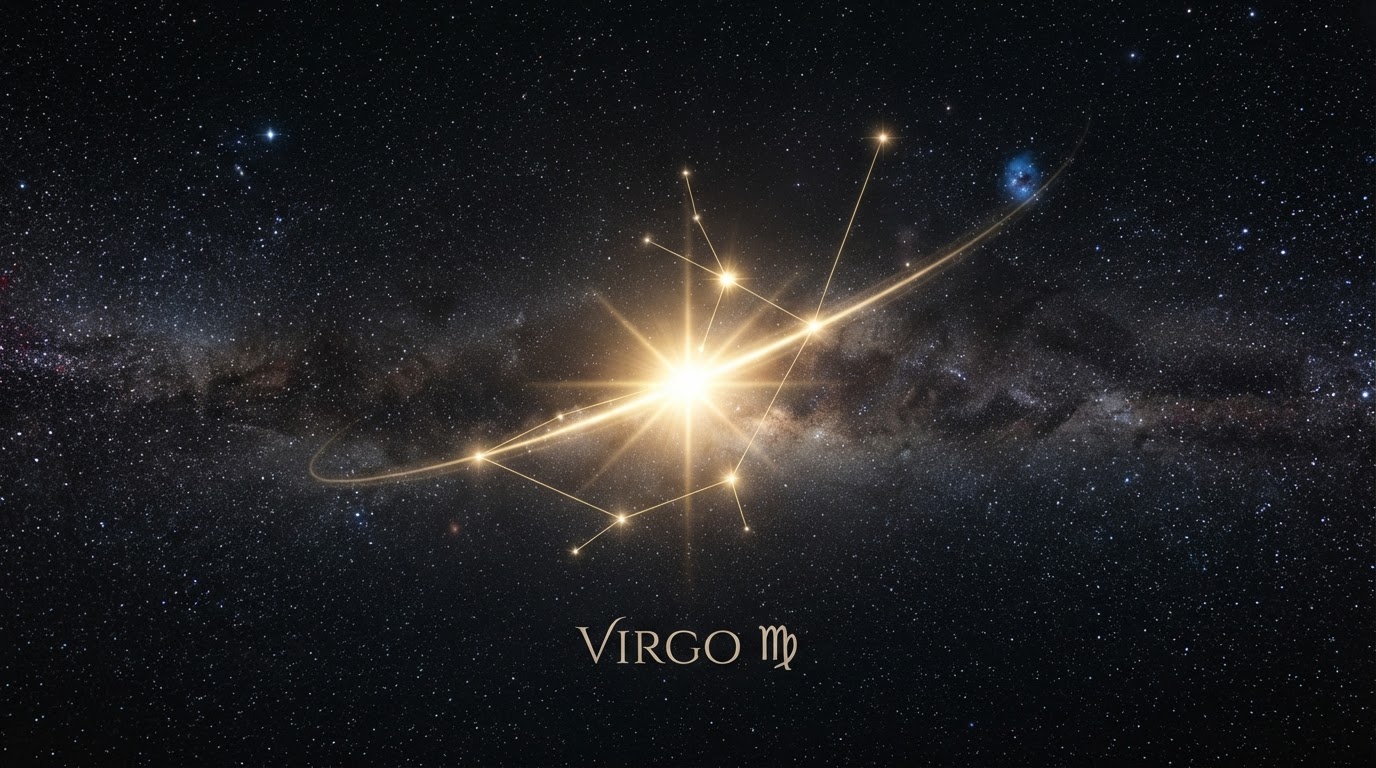
August 22: Sun Enters Virgo
This is the season’s opening line. The Sun moving into Virgo shifts the collective mood from Leo’s “look at what I made” to Virgo’s “let me look at it closely.” Expect the next month to feel less about grand gestures and more about maintenance — the unglamorous work of tending to what you already have. Health, routines, the small daily choices that either support you or quietly wear you down. Virgo doesn’t ask for a complete overhaul. It asks for attention to the parts you’ve been skipping.
Who feels this most: anyone with their Sun, Moon, or Rising in Virgo, Pisces, Gemini, or Sagittarius. If you’re a Virgo placement, this is your season in the most literal sense — expect it to feel personal, not just atmospheric. Pisces placements will feel it as a direct opposite-number pull toward practicality; Gemini and Sagittarius will feel a more sideways, “why does this suddenly matter to me” tension.
Who feels this least: Taurus, Leo, Scorpio, and Aquarius placements. You’ll likely register this more as background weather than a personal assignment — useful to notice, not urgent to act on.
August 25: Mercury Enters Virgo
Mercury rules Virgo, so this is the ruler coming home. When Mercury sits in the sign it governs, thinking tends to sharpen — less scattered, more exact. This is a good window for anything that requires actually getting the details right: contracts, schedules, health information, the kind of thinking that catches the error before it becomes a problem. The risk on the other side of that same sharpness is over-editing — using precision as a way to avoid ever finishing anything. Mercury in Virgo is a tool for refinement, not an excuse for perfectionism.
Who feels this most: it’s worth knowing your actual natal Mercury sign, not just your Sun, Moon, and Rising. Mercury only rules two signs — Virgo and Gemini — so this transit is Mercury coming home specifically for whoever has their natal Mercury sitting in one of those two. If your birth chart shows Mercury in Virgo or Gemini, this window is genuinely about you: your own thinking is the thing sharpening, not just the collective mood. (You can check this on your full chart, not your sun-sign horoscope — the same free chart calculator linked later in this piece will show it.) If you don’t know your natal Mercury off the top of your head, Virgo, Pisces, Gemini, and Sagittarius Sun, Moon, or Rising placements will still catch the general seasonal pull toward precision — just a less personal, more ambient version of it.
Who feels this least: if your natal Mercury falls in Taurus, Leo, Scorpio, or Aquarius, this transit is largely happening around you rather than to you — your own thinking style won’t sharpen the way it will for someone whose Mercury is actually being visited.
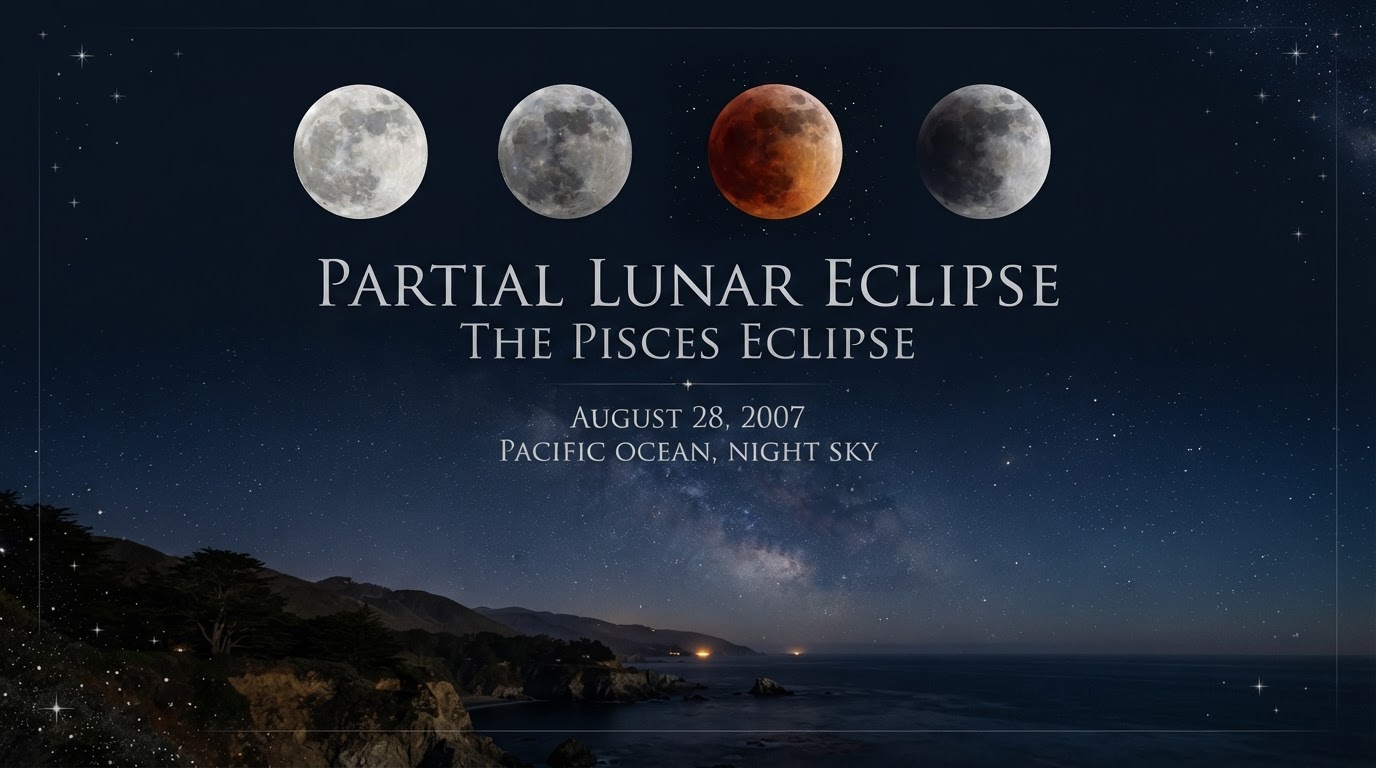
August 28: Partial Lunar Eclipse in Pisces
Just six days into Virgo season, the Full Moon arrives as a partial lunar eclipse directly opposite the Sun, in Pisces. Eclipses accelerate things — they tend to bring endings or realizations that would otherwise have unfolded slowly, and they compress that timeline. A Pisces eclipse specifically tends to surface whatever’s been dissolved, avoided, or quietly ignored: an emotional truth you’ve been letting slide, a boundary that’s gone soft, a spiritual or creative thread you dropped without meaning to.
The Virgo-Pisces axis is one of the most direct polarities in the whole zodiac — Virgo wants to sort, name, and fix; Pisces wants to dissolve, feel, and surrender. This eclipse sits right on that line, so don’t be surprised if the days around it ask you to hold both at once: getting practical about something you’d rather just feel your way through, or finally feeling something you’ve been managing with logistics instead. Whatever surfaces here isn’t random. It’s usually the thing the last six months of eclipses have already been circling.
Who feels this most: Pisces and Virgo placements first and hardest — this is your axis, and if you’ve had other eclipses land hard on this same line over the past year and a half, this one is very likely a continuation of that story rather than a new one. Gemini and Sagittarius placements will feel a real but somewhat lower-voltage version of the same pull.
Who feels this least: Taurus, Leo, Scorpio, and Aquarius placements. Eclipses in this particular family aren’t lighting up your chart directly right now, so expect this one to be noticeable in the world around you more than in your own life.
September 10: A Loaded Pivot Day
Four things happen on the same day, which doesn’t happen often.
New Moon in Virgo
This is a genuine seed-planting moment — a much quieter, more intentional counterpart to the eclipse two weeks earlier. Where the Pisces eclipse forced things to the surface whether you were ready or not, this New Moon actually asks you what you want to do about it. Virgo New Moons are good for exactly one thing: picking a specific, practical intention and committing to the unglamorous follow-through it takes to actually see it out. Not a vision board. A system you’ll still be using in October.
Who feels this most: Virgo, Pisces, Gemini, and Sagittarius placements — the same mutable four that’s been active all season. If you’re a Virgo placement, this New Moon is happening in your sign specifically, which tends to make it feel more like a personal starting line than a general vibe.
Who feels this least: Taurus, Leo, Scorpio, and Aquarius placements. You can still use this New Moon to set an intention — everyone can — it just won’t have the same built-in urgency behind it.
Venus Enters Scorpio
Venus governs what we value and how we connect, and moving into Scorpio pulls both of those out of Virgo’s tidy, practical register and into something much more intense. Surface-level pleasantries stop being enough. This is a placement that wants real intimacy, real honesty about desire, and isn’t interested in performing closeness it doesn’t actually feel — in relationships, that can mean a conversation you’ve been keeping polite finally gets real. In terms of what you value, it can mean noticing that something you’ve been maintaining out of habit doesn’t actually move you anymore, and something you’d been downplaying does.
Who feels this most: Scorpio, Taurus, Leo, and Aquarius placements — the fixed-sign group. Scorpio and Taurus placements will feel it most directly, since Venus is either visiting your sign or squaring off with it from directly across the wheel; Leo and Aquarius will feel a real but slightly more indirect pull toward the same emotional honesty.
Who feels this least: Virgo, Pisces, Gemini, and Sagittarius placements. This one’s likely to read as “interesting to watch in other people” more than “happening to me.”
Mercury Enters Libra
Mercury spent the last two and a half weeks in Virgo getting sharp, exact, detail-obsessed. Moving into Libra softens all of that into something more diplomatic — thinking that considers the other person’s side before it opens its mouth, communication built for negotiation and relationship rather than being right. The upside is real tact and genuine give-and-take. The risk is using that same diplomacy to avoid saying the direct thing a conversation actually needs, especially right after Venus has just asked Scorpio-level honesty of you in the same breath.
Who feels this most: Mercury doesn’t rule Libra — Venus does — so this isn’t a homecoming the way Mercury-in-Virgo was. What matters here is whoever has natal Mercury in Libra or Aries: for you, this transit is Mercury visiting or directly opposing your own thinking-planet, which tends to feel like your internal narration itself getting more diplomatic, not just the mood around you. Libra, Aries, Cancer, and Capricorn Sun, Moon, or Rising placements will feel the general cardinal-sign pull toward tact and negotiation either way.
Who feels this least: if your natal Mercury sits in Taurus, Leo, Scorpio, or Aquarius, your own thinking style probably won’t shift much here — you’ll likely just notice other people getting more tactful around you.
Uranus Stations Retrograde in Gemini
This doesn’t move Uranus into a new sign — it’s still in Gemini, where it’s been for a while — but stationing retrograde changes how its energy shows up. Direct Uranus tends to deliver its wake-up calls through sudden outside events; retrograde Uranus turns that same unpredictable, lightning-bolt quality inward, so the disruption is more likely to arrive as a sudden realization than a sudden event. Watch for insights about your own thinking, beliefs, or communication patterns that seem to come out of nowhere over the following weeks — that’s this station doing its work.
Who feels this most: Gemini, Virgo, Sagittarius, and Pisces placements — the mutable four again. Gemini placements are the most directly implicated, since Uranus is moving through your own sign right now; the other three will feel it as sudden clarity rather than sudden disruption.
Who feels this least: Taurus, Leo, Scorpio, and Aquarius placements. This station is more likely to show up for you as news about someone else’s sudden realization than your own.
Treat this day less as one single theme and more as a genuine crossroads. Whatever intention you set with the Virgo New Moon is about to be handed off to Scorpio’s intensity and Libra’s relational lens almost immediately, so make it specific enough to survive the shift.
September 22: Sun Enters Libra, Season Closes
Virgo season ends the way it always does — by handing off to Libra, and the shift from “does this work” to “does this feel balanced, does this feel fair” is its own kind of relief. Whatever got refined, corrected, or finally addressed during Virgo season becomes the foundation Libra season builds relationships and balance on top of.
Who feels this most: Libra, Aries, Cancer, and Capricorn placements. If you’re a Libra placement, this is your season starting — expect the shift in mood to feel personal rather than general.
Who feels this least: Taurus, Leo, Scorpio, and Aquarius placements. You’ll likely notice the shift in the world around you before you notice it in yourself.

Working With Virgo Season
You don’t need a five-planet transit chart to work with this season — a few small, consistent habits do more here than one big gesture.
Pick one system, not five. Virgo energy loves to reorganize everything at once and then abandon it all by week two. Choose a single area — your morning routine, your finances, one health habit — and actually refine it instead of overhauling your whole life.
Write things down. Mercury in its home sign is made for this. A simple daily log of what worked and what didn’t, even three lines a day, does more for you this season than a perfect system you never maintain.
Let the Pisces eclipse have its say before you fix it. Whatever surfaces around August 28th, resist the urge to immediately problem-solve it. Sit with it for a day or two first. Virgo will still be there to help you organize it once you actually know what it is.
Set one specific intention at the September 10th New Moon. Not five. One, specific enough to survive Venus moving into Scorpio and Mercury into Libra the same day.
Build in one imperfect day a week. Virgo season can quietly turn into a season of never feeling like enough got done. Pick one day where good enough is genuinely good enough, on purpose, and hold that boundary the same way you’d hold any other one.
Ready to see how Virgo season is actually landing in your own chart — not just the collective weather, but where it’s hitting your specific placements? Book your natal chart session to find out.
This forecast draws on the evolutionary astrology tradition developed by Steven Forrest, particularly the transit framework from his book The Changing Sky — for more on how transits work as evolutionary weather rather than fixed fate, his site and books are the place to start.