
Nervine herbs get thrown around a lot in wellness spaces, often with more vibes than substance behind them. This post goes herb by herb — what each one can actually do for your nervous system, and how honest the evidence behind it really is — so you know what you’re working with.
A few of these herbs are considered trophorestoratives: with regular use over time, they don’t just calm you down in the moment, they help nourish and rebuild your nervous system itself. That’s flagged herb by herb below.
Lemon Balm (Melissa officinalis)
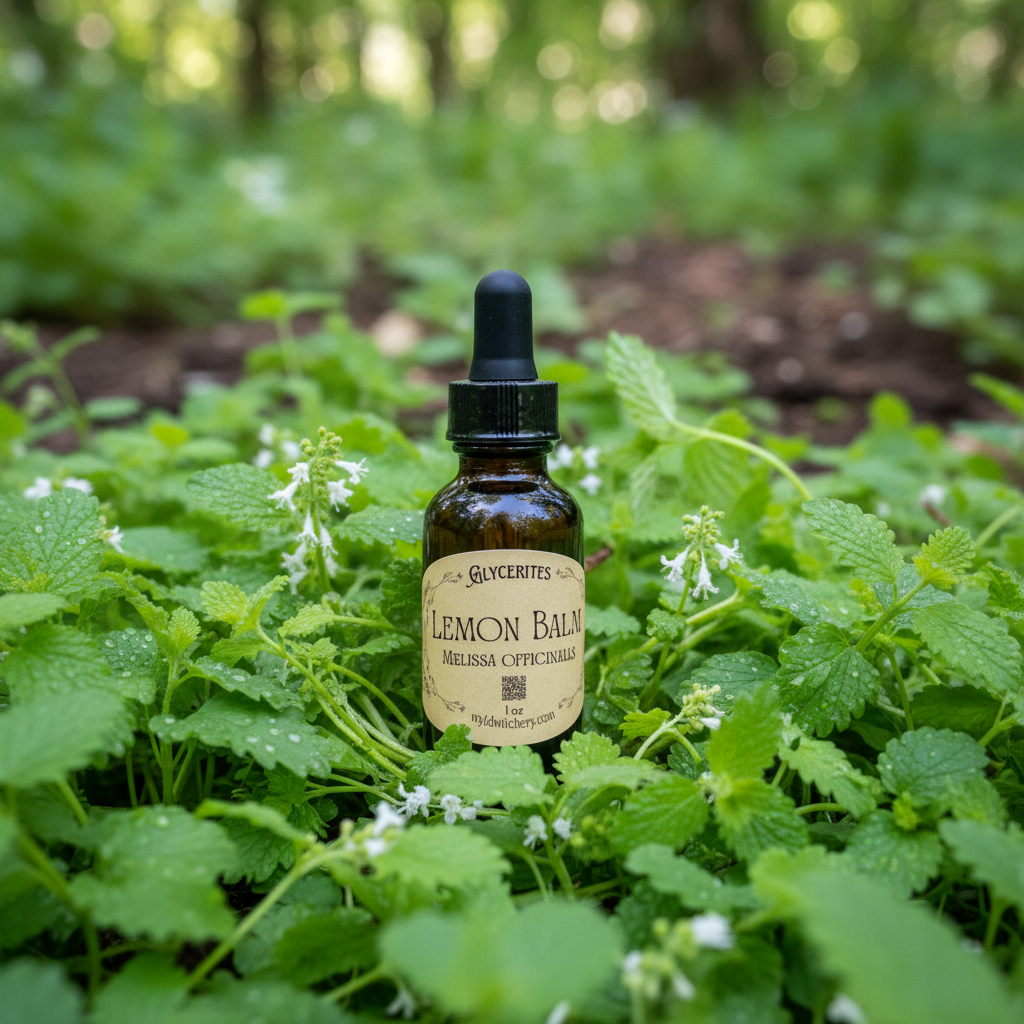
What it can do for you: Lemon balm is one of the best-supported calming herbs out there. It’s been shown to genuinely ease anxiety and low mood, help people relax and sleep better after stressful events (like surgery), and take the edge off day-to-day stress and sleep disturbance. It works gently on the same calming pathways in the brain that help you unwind naturally.
For more medicinal information and studies, see here: Lemon balm systematic review, Phytotherapy Research
- Format note: An “any format works” herb — extracts reasonably well in water, alcohol, and glycerin alike.
- Tincture: 3–5 mL, several times daily
- Glycerite: 1–2 mL daily as a tonic; up to 3 mL for stress or before bed for sleep
- Tea: Everyday and medicinal tiers both work; pleasant tasting
Try it for yourself: Lemon Balm Glycerite and Lemon Balm Tea Bags (single-herb).
A few things to know: If you have a thyroid condition (especially an underactive thyroid) or take thyroid medication, check with your doctor first — lemon balm may affect thyroid hormone levels. It can add to the drowsiness of sedatives, sleep aids, or alcohol, so go easy if you’re combining them. If you have glaucoma, use caution, since animal studies suggest it might raise eye pressure. Not recommended during pregnancy or breastfeeding due to limited safety data. Stop use about two weeks before any scheduled surgery.
Wood Betony (Stachys officinalis, also called Betonica officinalis)
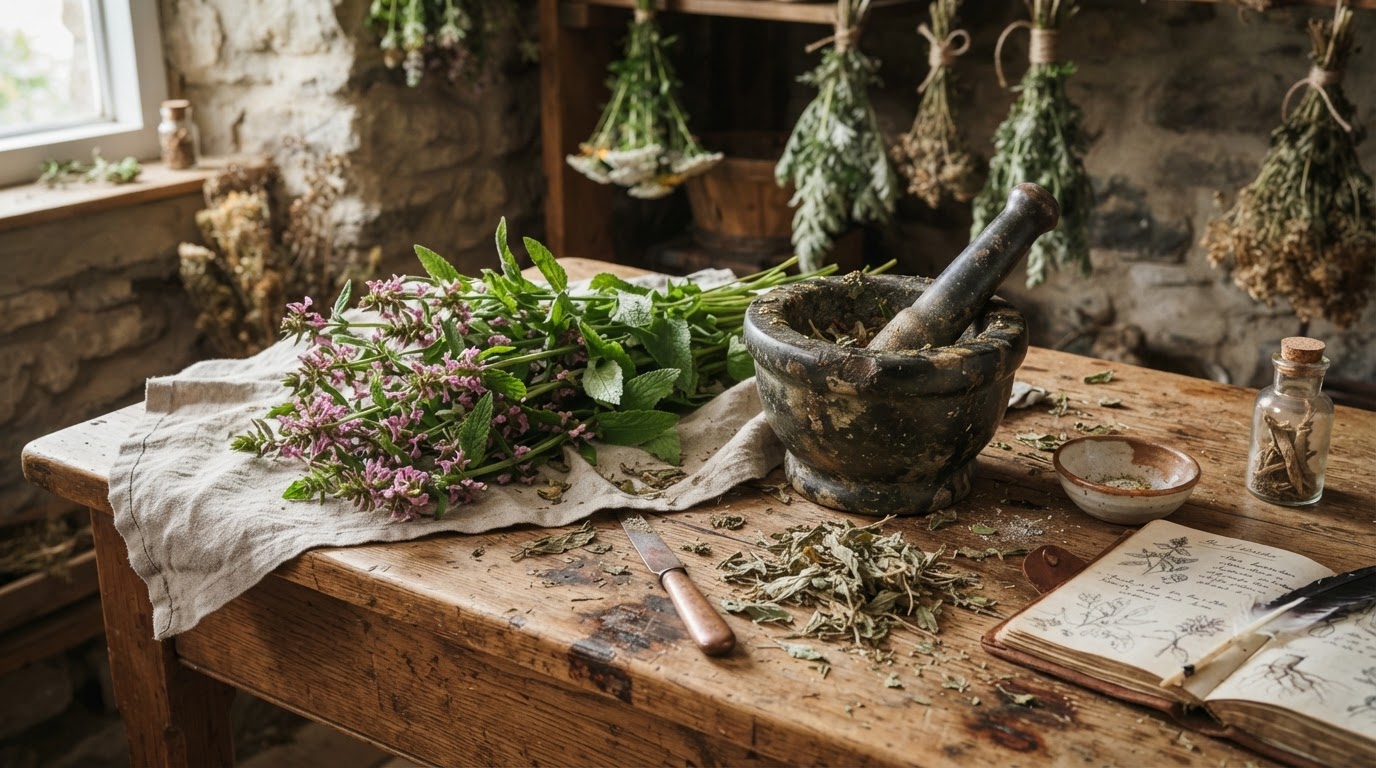
What it can do for you: A go-to herb for tension that settles at the base of the skull — the kind of tight, stress-driven headache that comes with mental overload. It’s traditionally used for nervous tension, anxiety, poor focus, and stress-related nightmares, and it has a nice dual action: it calms the nervous system and supports digestion at the same time, which matters since stress so often shows up in the gut too.
- Format note: Extracts well in both alcohol and water; glycerite is the weakest of the three formats for this particular herb.
- Tincture: ~1 mL, up to 4x/day
- Glycerite: 2–3 mL, up to 3x daily
- Tea: Everyday cup ~1 tsp covered 5–7 min; medicinal cup 1–2 tbsp covered 15 min
Try it for yourself: Featured in Head Soother Tea; Wood Betony Glycerite.
A few things to know: Wood betony can mildly stimulate the uterus, so it’s best avoided during pregnancy and breastfeeding. Taking too much can cause stomach upset or mild nausea. Otherwise, it’s considered a very gentle, well-tolerated herb with no known drug interactions.
Passionflower (Passiflora incarnata)
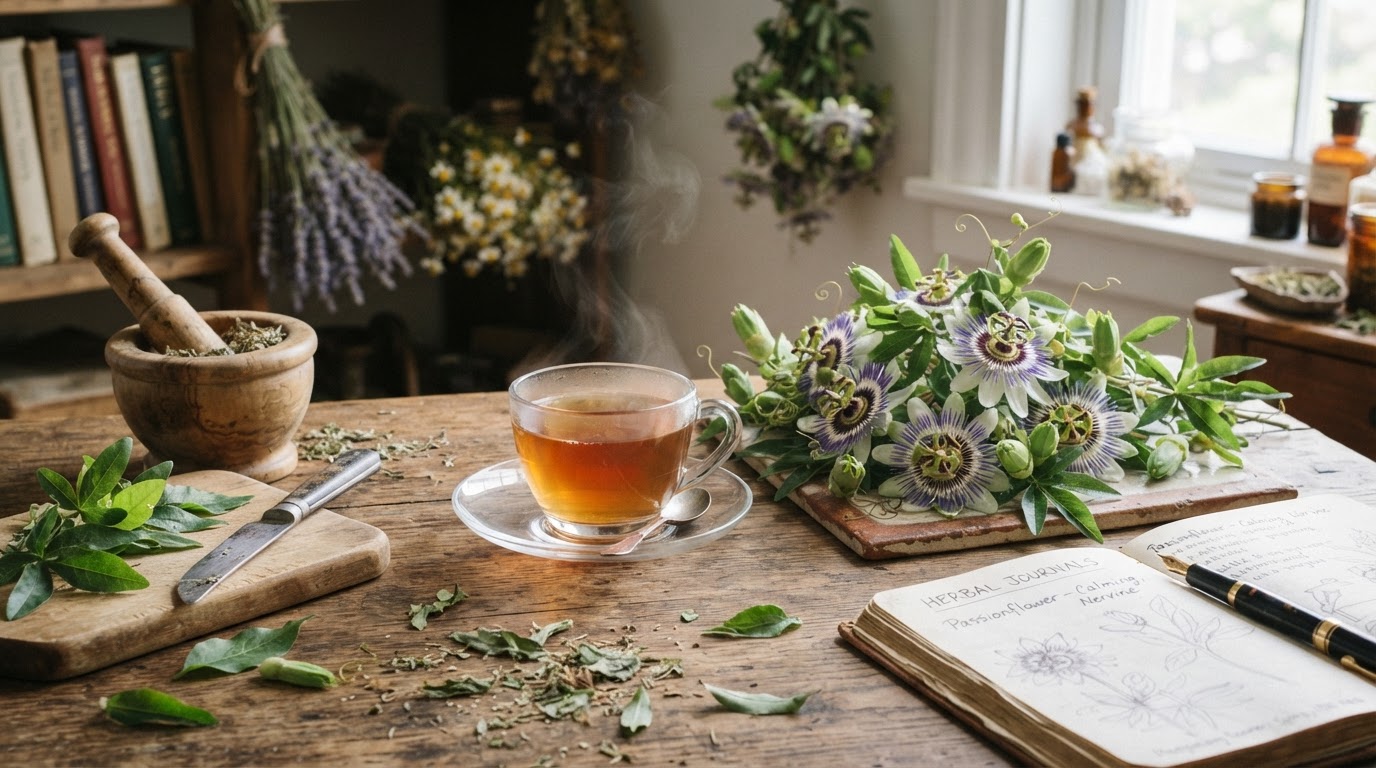
What it can do for you: One of the strongest calming herbs available — in a real head-to-head study, passionflower worked just as well as a prescription anti-anxiety medication for easing generalized anxiety, without the same next-day grogginess or performance impact. It’s a great option if you carry a lot of stress and have a hard time letting it go.
For more medicinal information and studies, see here: Passionflower vs. oxazepam trial
- Format note: Real potency gap between formats — carry both tincture and glycerite, being upfront that tincture is the more potent, clinically-studied version.
- Tincture: 1–1.5 mL, 3x/day
- Glycerite: 1.5–2 mL, 3x/day
- Tea: Everyday cup ~1 tsp covered 5–7 min; medicinal cup 1–2 tbsp covered 15 min
Try it for yourself: Featured in Peace Tea, or try Passionflower on its own as a loose herb.
A few things to know: Not recommended during pregnancy — it may stimulate the uterus — and there’s not enough safety data to recommend it while breastfeeding either. It can add to the effects of sedatives or anti-anxiety medications, so use caution if you’re combining them, and it shouldn’t be paired with older-style antidepressants called MAOIs. Since it can cause drowsiness, it’s best avoided right before driving or operating machinery, and it’s a good idea to pause use for a couple of weeks before any scheduled surgery.
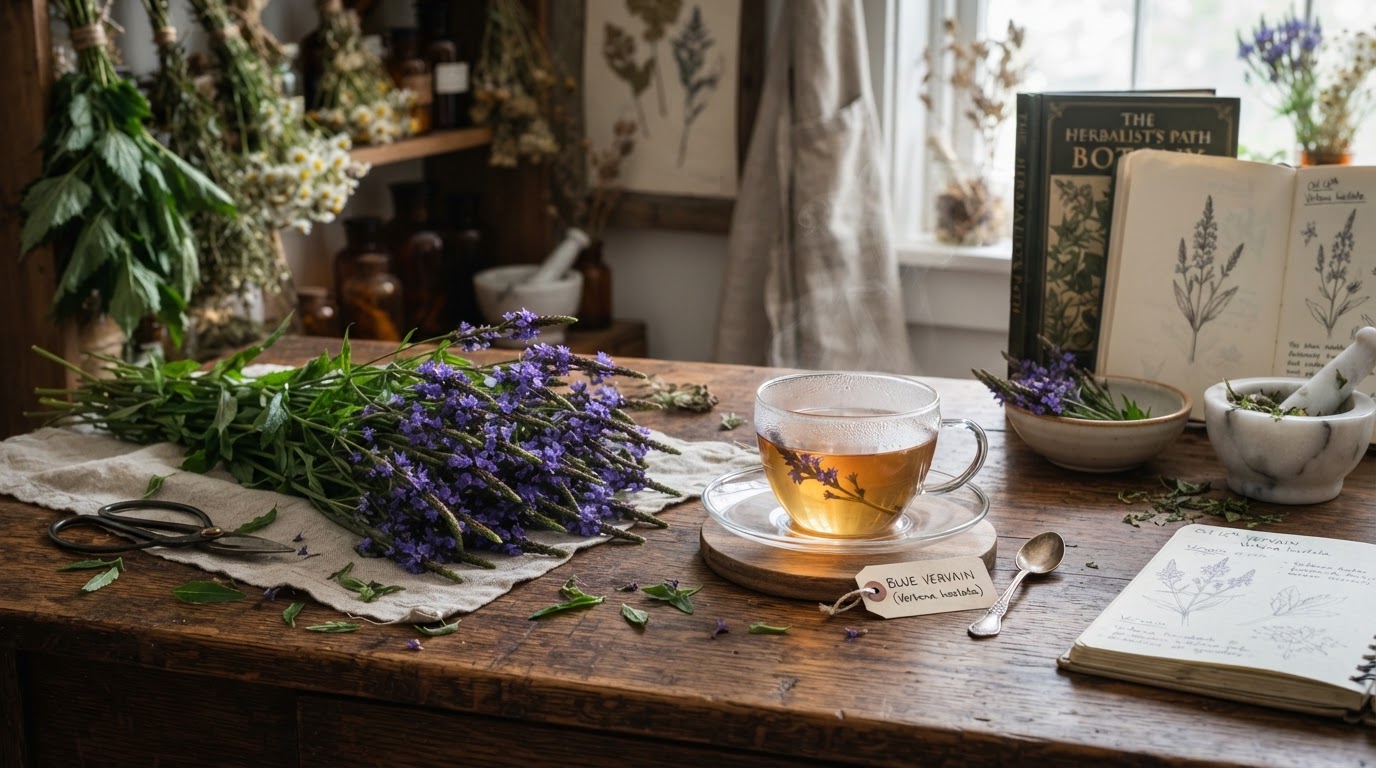
Blue Vervain (Verbena hastata)
What it can do for you: A traditional nervine for people who tend to overdo it — the type-A, can’t-shut-the-brain-off crowd. It’s used to ease nervous tension and support the ability to actually rest.
- Format note: Same structure as Verbena officinalis, below.
- Tincture: 2.5–5 mL, 3x/day
- Glycerite: 3.5–6 mL, 3x/day
- Tea: Everyday cup — 2 tsp, covered, 5–7 min, sweetener recommended. Medicinal tea not recommended — too bitter.
Try it for yourself: Available as a loose herb only — no pre-blended tea currently.
A few things to know: Blue vervain is not recommended during pregnancy, as it may stimulate the uterus, and it’s best avoided while breastfeeding as well. It can lower blood pressure further in people already on blood pressure medication, and may add to the drowsiness of sedatives. Taking much more than the recommended amount can cause nausea or vomiting.
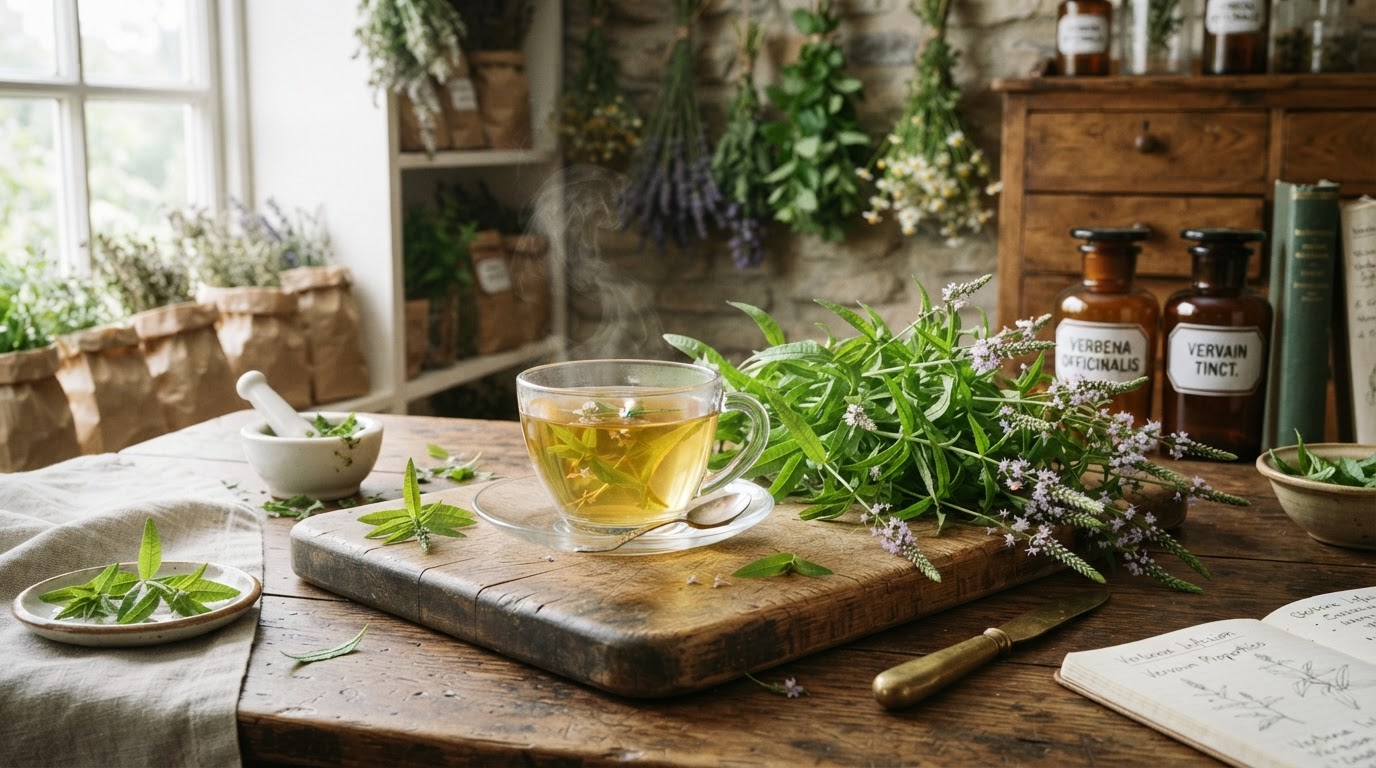
Verbena officinalis (European Vervain)
What it can do for you: Also called “the enchanter’s herb” in old European folk tradition, this one carries the same calming, nervous-system-supporting reputation as blue vervain, with findings suggesting it works on some of the same calming pathways as anti-anxiety medications.
Format note: Same dosing structure as blue vervain (above).
Try it for yourself: Available as a loose herb (true European vervain) only. Important note: lemon verbena is a completely different, unrelated plant — not the same herb — worth calling out clearly so people don’t mix them up.
A few things to know: Same core caution as blue vervain — not recommended during pregnancy, since it may stimulate the uterus, and best avoided while breastfeeding. Considered safe at normal culinary/herbal doses for most healthy adults; taking much more than recommended can cause stomach upset.
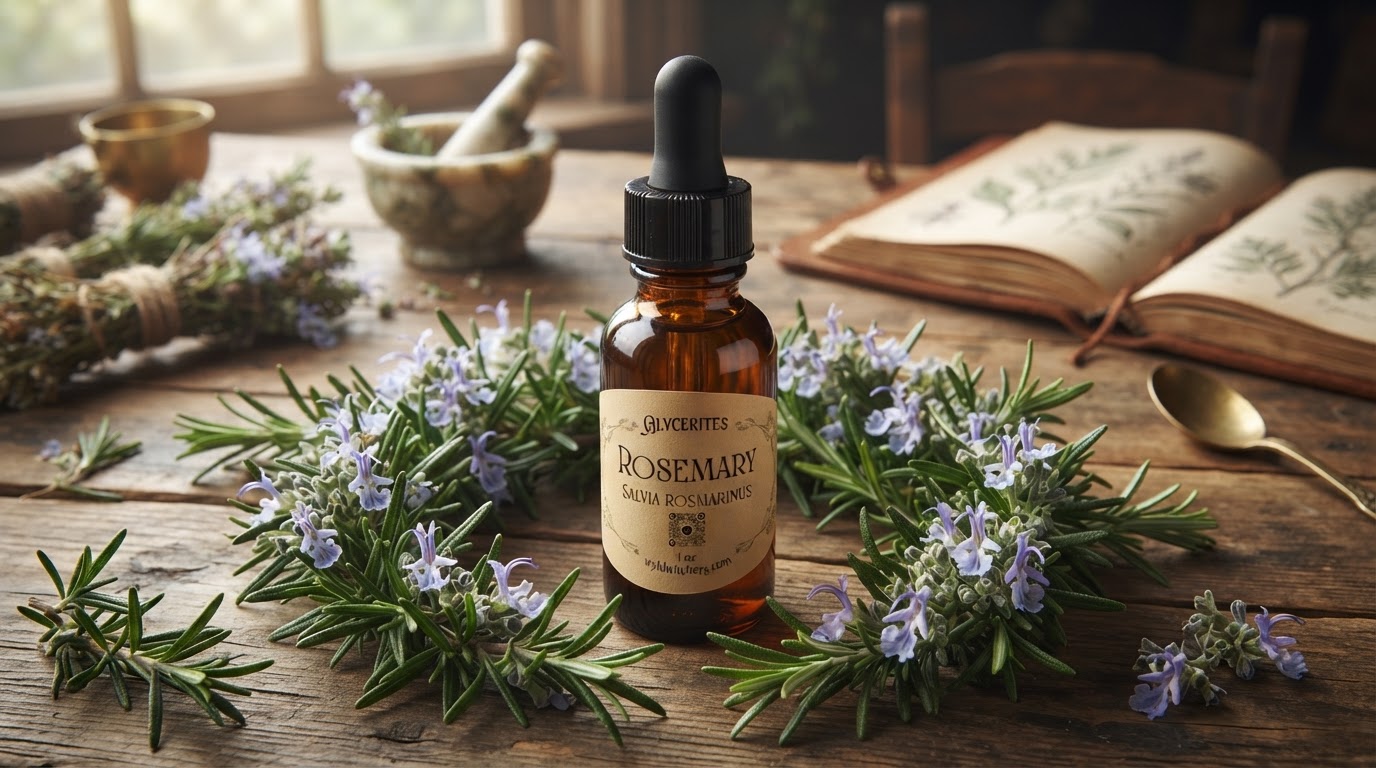
Rosemary (Rosmarinus officinalis)
What it can do for you: More than just a kitchen herb — rosemary genuinely supports memory and focus while also calming anxiety and low mood and improving sleep, all at once. It’s a nice dual-purpose herb if you want something that supports a clear head and a calm nervous system, rather than picking one or the other.
For more medicinal information and studies, see here: Rosemary clinical trial, university students
- Format note: Extracts well across all three formats. Tincture uniquely captures some of rosemary’s brain-protective compounds that tea and glycerite don’t fully pull.
- Tincture: 1 mL, up to 3x daily
- Glycerite: 2–3 mL, up to 3x daily
- Tea: Everyday and medicinal tiers both work; pleasant tasting
Try it for yourself: Available as loose herb, glycerite, or tincture. If you want rosemary’s focus-and-clarity benefits in a more concentrated, multi-herb form, check out our Smarts tincture — a five-herb blend (rosemary, rhodiola, ginkgo biloba, ginger, and bacopa) built for mental stamina, memory, and focus.
A few things to know: At medicinal (non-culinary) doses, rosemary isn’t recommended during pregnancy, as it may stimulate the uterus. If you have a seizure disorder, use caution, since concentrated rosemary may lower the seizure threshold. It can also increase bleeding risk for people on blood thinners, and may interact with certain blood pressure medications. Everyday cooking amounts are considered safe — these cautions apply to medicinal-strength tea, tincture, or glycerite use.
St. John’s Wort (Hypericum perforatum)
What it can do for you: One of the most studied herbs for mood support that exists — genuinely effective for easing mild to moderate low mood, and research suggests it can work about as well as standard prescription antidepressants for that use.
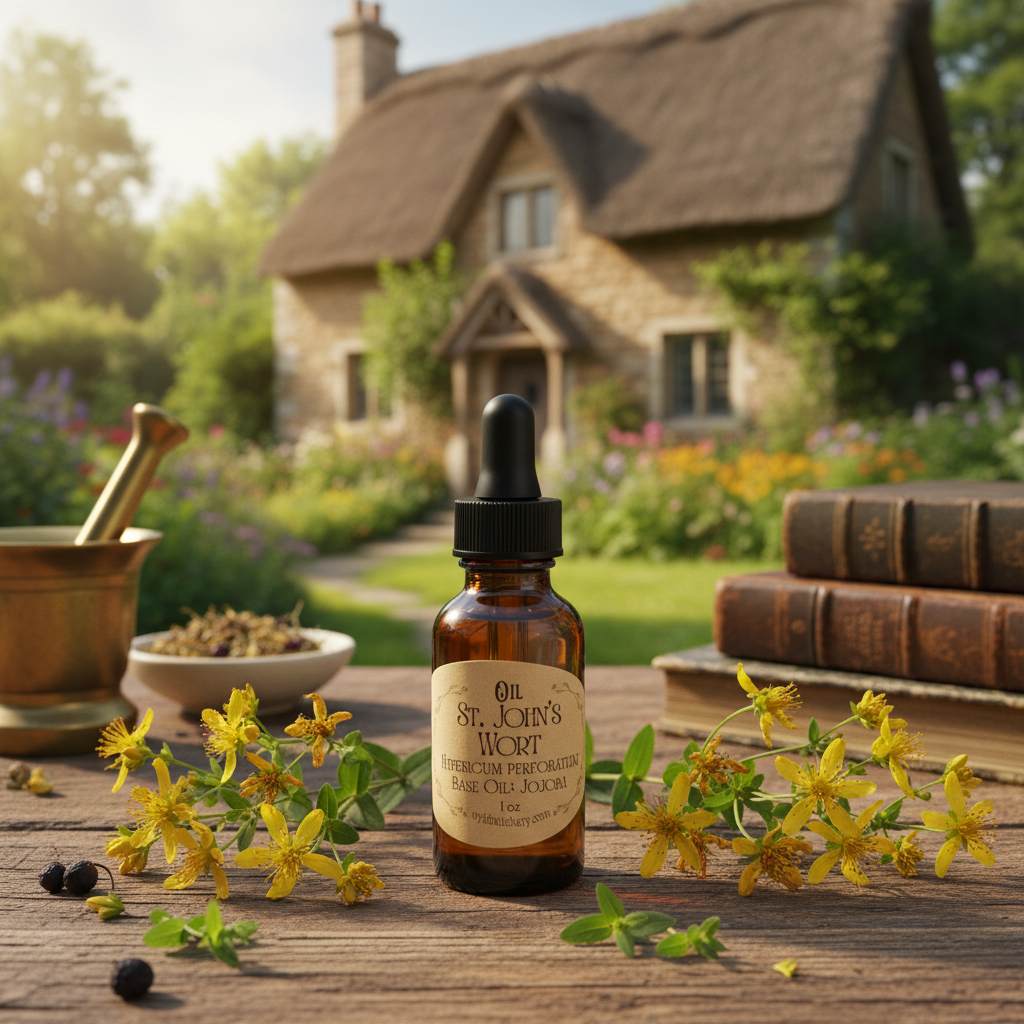
⚠️ Please read this before anything else: St. John’s Wort can seriously interact with a long list of medications — birth control, blood thinners, antidepressants, and more — sometimes making those medications quietly less effective, or in some combinations, dangerous. It can also make your skin more sensitive to sunburn. If you’re on any medication at all, please talk to your doctor or pharmacist before trying this one. This is the one herb in this post where that conversation isn’t optional.
For more medicinal information and studies, see here: NCCIH — St. John’s Wort and Depression
- Format note: We currently carry St. John’s Wort as a glycerite only — no separate tincture or loose tea in the shop yet.
- Glycerite: 2–3 mL, up to 3x daily
Try it for yourself: St. John’s Wort Glycerite, or St. John’s Wort as a loose herb.
Skullcap (Scutellaria lateriflora)
What it can do for you: A real standout — skullcap genuinely lifts mood and eases stress without leaving you foggy or drained the way some calming herbs can. It’s a great choice if you want to feel calmer without feeling checked-out.
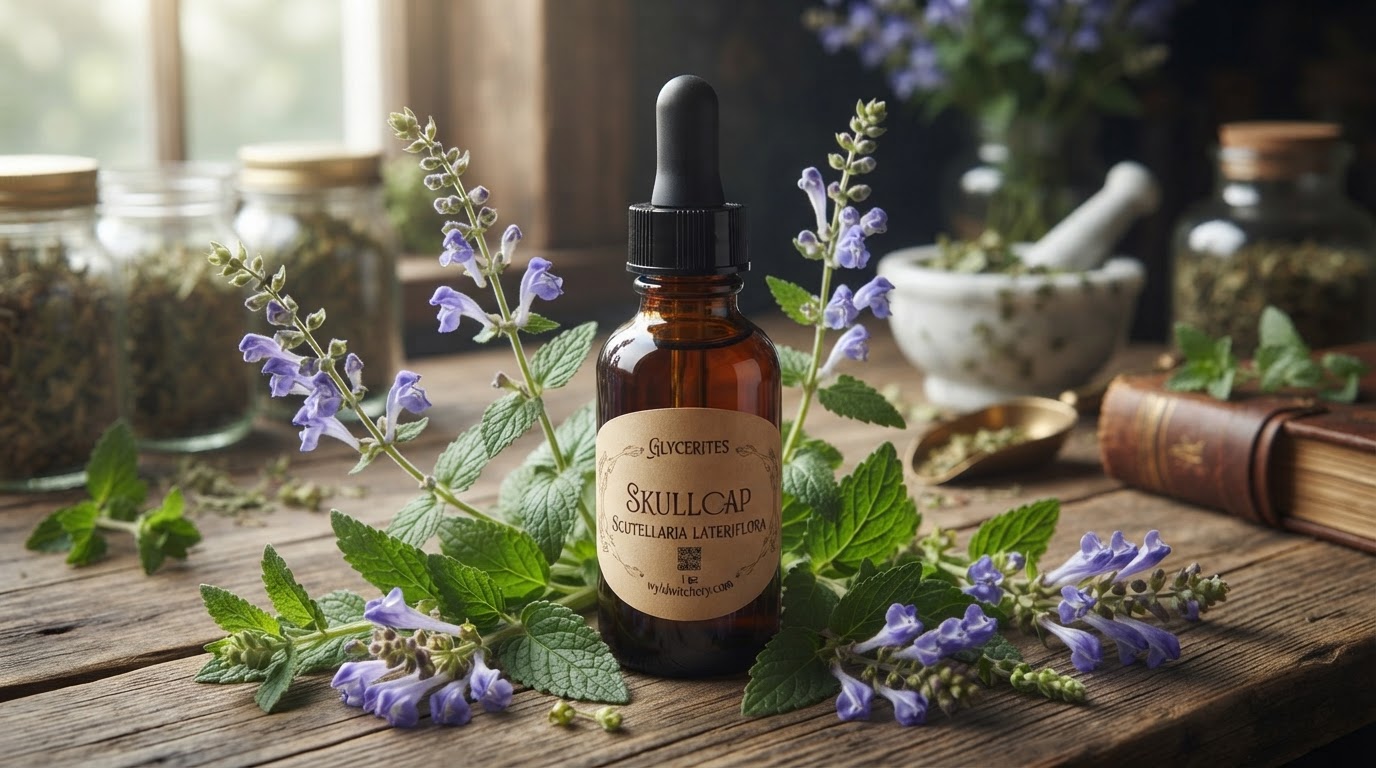
For more medicinal information and studies, see here: Skullcap mood study, healthy volunteers
Brewing note (important): Brew skullcap tea with water just below a boil (around 200°F), not a full rolling boil. Boiling it fully still gives you a calming effect, but you’ll lose some of the natural aromatic oils that add to the relaxing benefit — so it’ll still work, just not as strongly.
- Format note: Extracts reasonably well across all three formats.
- Tincture: 1–2 mL, 3x/day
- Glycerite: 1–2 mL, 3x/day
- Tea: Sub-boiling water, per the brewing note above
Try it for yourself: Featured in Head Soother, Avena Dream, and Dream Tea blends; Skullcap Glycerite — can be stirred into any of these cups for an extra boost.
A few things to know: Genuine skullcap has an excellent safety record. There’s not enough safety data to recommend it during pregnancy or breastfeeding, so it’s best to check with your doctor first. One important buying note: make sure any skullcap product is verified as true Scutellaria lateriflora — past liver-safety concerns with skullcap were later traced to contamination with a different, unrelated plant (germander), not skullcap itself.
Chamomile (Matricaria recutita)
What it can do for you: Not just a cozy bedtime tea — chamomile has real, strong backing for easing anxiety, with some of the best clinical results of any herb in this post. It may also help lift mood in people dealing with both anxiety and low mood together.
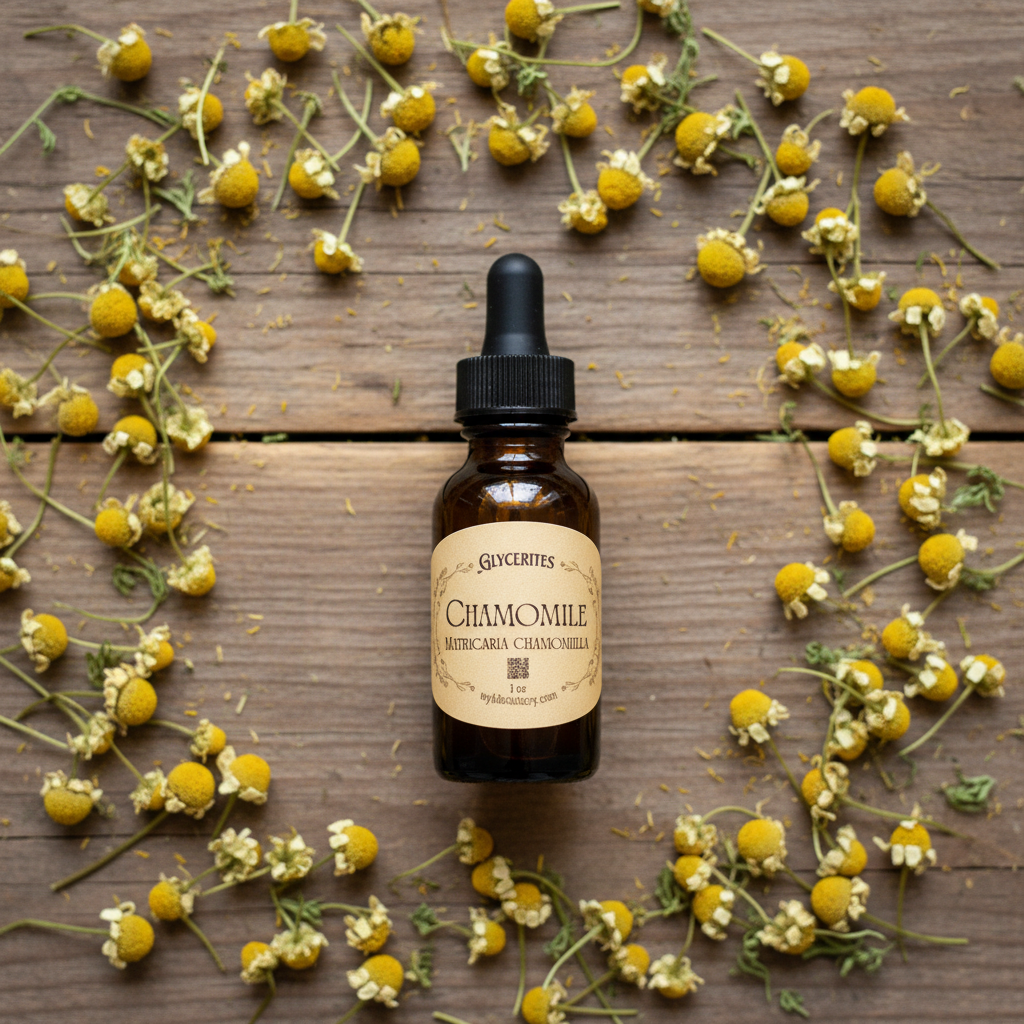
For more medicinal information and studies, see here: Chamomile GAD trial, open-label phase
- Format note: Extracts well across all three formats — chamomile’s calming compounds pull easily into water, alcohol, or glycerin alike, so no format loses much potency.
- Tincture: 1 mL, 3x/day
- Glycerite: 1–2 mL daily; up to 2–3 mL for sleep, stomach upset, or an allergy flare
- Tea: Everyday and medicinal tiers both work; bitterness warning on the medicinal-strength cup
Try it for yourself: Chamomile Tea Bags (single-herb) and Chamomile Glycerite; also featured in Evening Repose, Dream Tea, and Peace Tea blends.
A few things to know: If you’re allergic to ragweed, daisies, marigolds, or chrysanthemums, chamomile can trigger a similar allergic reaction, so it’s best avoided. It can also increase bleeding risk if you’re on blood thinners like warfarin, and may mildly reduce the effectiveness of birth control pills. Not recommended during pregnancy or breastfeeding.
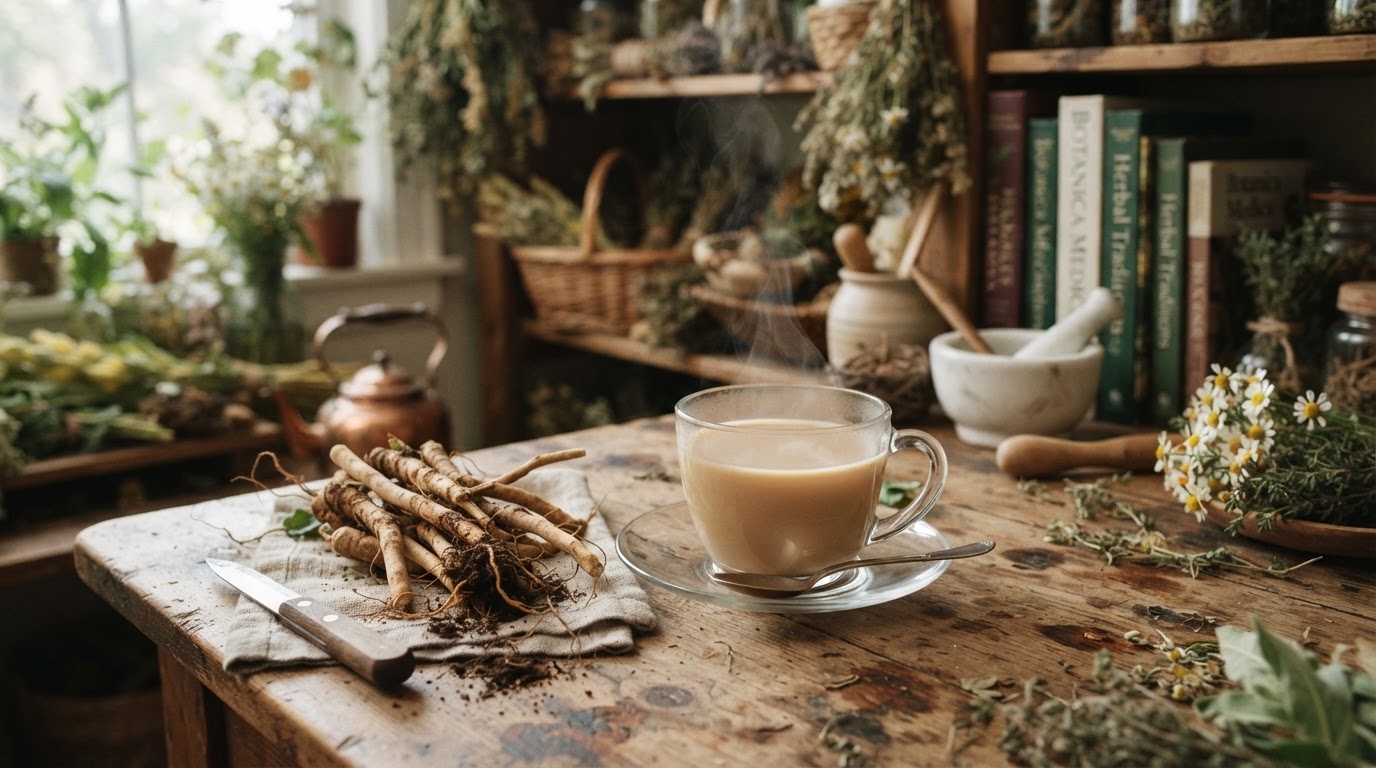
Ashwagandha (Withania somnifera)
What it can do for you: Likely the single best-researched herb in this whole post. Ashwagandha reliably lowers stress and anxiety and brings down actual cortisol levels — your body’s real stress hormone, not just how you feel about it. It’s also very well tolerated, with side effects generally no worse than placebo across the research.
For more medicinal information and studies, see here: Ashwagandha stress & anxiety meta-analysis
- Format note: Ashwagandha’s key active compounds don’t dissolve well in water or glycerin — that’s why the traditional Ayurvedic prep is a milk-and-ghee decoction; fat helps your body actually absorb them. Real formats here: tincture, oil infusion, and traditional milk-based preparation, not the standard tincture/glycerite/tea structure.
- Tincture: Available in store only. Call us at 803-818-2133 for more information.
- Milk preparation: Traditional method — lightly simmer powder with warm milk, sweeten with honey.
Try it for yourself: Ashwagandha Root Tea Bags (single-herb) — a clean, direct trophorestorative pick. Also a supporting ingredient in Soothing Sleep Support Tea Bags.
A few things to know: Not recommended during pregnancy or breastfeeding. If you have a thyroid condition, especially an overactive thyroid, check with your doctor first, since ashwagandha can raise thyroid hormone levels. The same caution applies to autoimmune conditions like lupus or rheumatoid arthritis, since it may stimulate immune activity. It’s also worth pausing at least two weeks before any scheduled surgery, and anyone with liver concerns should check in with their doctor first, since rare cases of liver injury have been reported.
Holy Basil / Tulsi (Ocimum sanctum)
What it can do for you: A genuinely well-studied adaptogen — tulsi eases everyday stress, improves sleep quality, and lowers cortisol, plus some research shows it can sharpen focus, memory, and attention along the way.
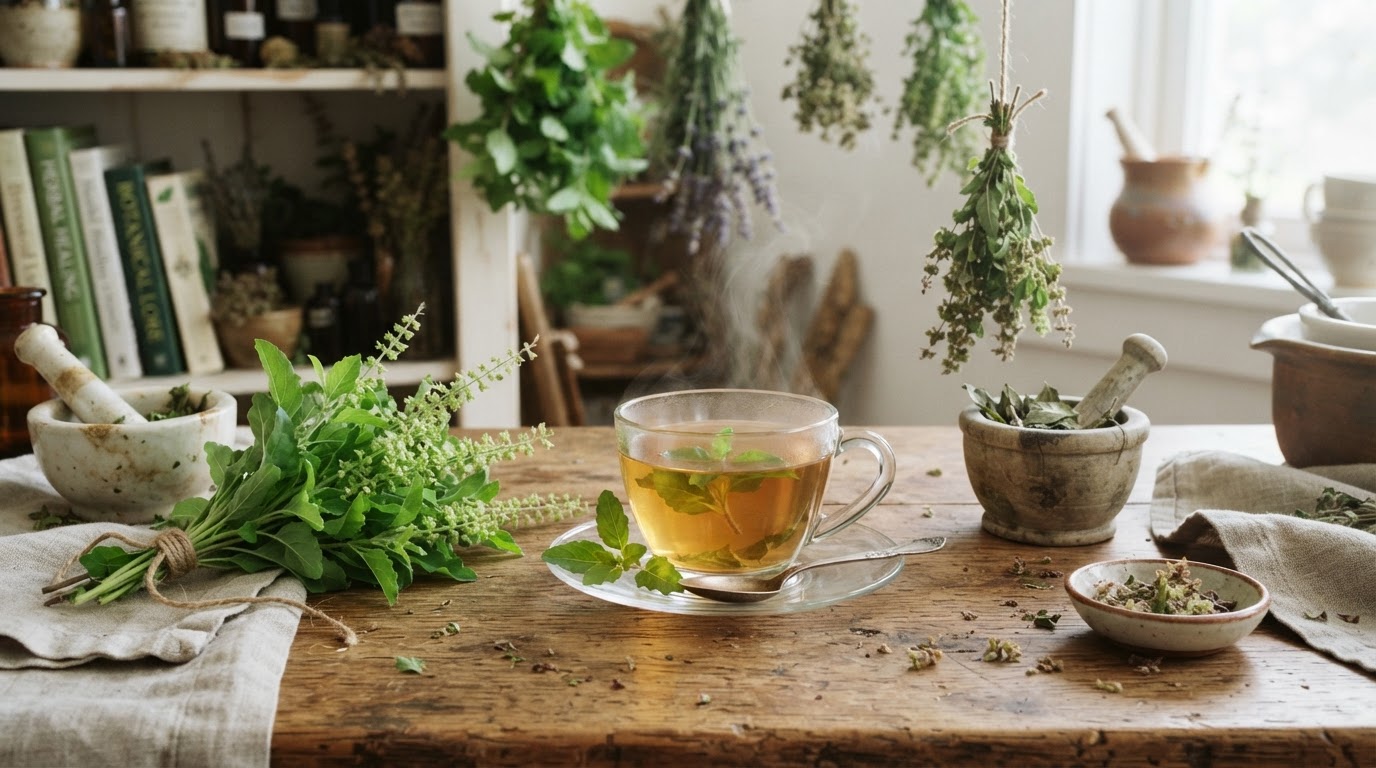
For more medicinal information and studies, see here: Holy basil stress & sleep trial
Important honest note: Tulsi is wonderful for everyday stress and emotional balance — but it is not a substitute for what St. John’s Wort does for true depression. That’s a real gap worth naming rather than glossing over. For actual depression, please work with a qualified herbalist or doctor rather than relying on tulsi alone. Tulsi is also not a trophorestorative — it’s an adaptogen, meaning it helps your body handle stress in the moment, a different category from the rebuild-over-time herbs above.
Try it for yourself: Tulsi Rose Tea — combines all three tulsi varieties (Krishna, Rama, Vana) with rose and chamomile, for real mood and stress support in a beautifully blended cup. Optional boost: stir 1–2 mL lemon balm glycerite into a cup of Tulsi Rose Tea for extra mood and stress support.
A few things to know: Not recommended during pregnancy or for anyone trying to conceive, and there isn’t enough safety data to recommend it while breastfeeding. If you have diabetes or take blood sugar medication, keep an eye on your levels, since tulsi may lower blood sugar. It can also slow blood clotting, so use caution if you’re on blood thinners, and it’s worth pausing use about two weeks before any scheduled surgery.
A Note on Oatstraw (Why It’s Not Featured as a Trophorestorative)
You’ll often see milky oats (Avena sativa) called one of the best nervous-system-rebuilding herbs out there — but that’s only true in its fresh, milky stage, right off the plant. Once it’s dried, that specific rebuilding property is gone. What we carry (oatstraw, oat tops whole) is the dried form — still genuinely valuable as a gentle, mineral-rich tea that supports your nervous system as a whole (silica, calcium, magnesium), just not as a true trophorestorative. We’d rather tell you that honestly than oversell it.
If you specifically want the trophorestorative benefit, look for a tincture made from fresh milky oats rather than dried oatstraw — the label should say so directly. We don’t currently carry one ourselves, but Natura Sophia Spagyrics’ Milky Oats tincture is made from the fresh milky stage and is a solid option if you want the real trophorestorative version.
Nervine Trophorestoratives: The Long Game
Some nervine herbs don’t just calm you down in the moment — with regular use over time, they actually help nourish and rebuild your nervous system itself. These are called trophorestoratives. Think of the difference this way: a calming herb is like taking a deep breath when you’re overwhelmed, while a trophorestorative is more like strengthening the muscle that makes it easier to handle stress in the first place, built up gradually with consistent use rather than felt all at once.
Several herbs featured in this post fall into that category: passionflower, blue vervain, skullcap, wood betony, and ashwagandha.
Skullcap appears in our Head Soother, Avena Dream, and Dream Tea blends, and a Skullcap Glycerite is also available for stirring into any of these cups for an extra boost. Passionflower is featured in our Peace Tea. Wood betony is featured in Head Soother Tea, with a Wood Betony Glycerite also available. Ashwagandha has its own dedicated Ashwagandha Root Tea Bags, traditionally brewed in warm milk rather than water to help draw out its beneficial compounds, and for those wanting a more concentrated option, our ashwagandha tincture is available in store only — call us at 803-818-2133 for more information. Rosemary is available as a loose herb, glycerite, or tincture. And for those wanting to explore further, blue vervain and European vervain are available as loose herbs, both classic trophorestoratives, though not yet featured in a pre-blended tea.