
Most tea lovers know black, green, and white teas come from the same Camellia sinensis leaf, but few realize how the art of processing shapes every sip you enjoy. From the brisk boldness of Assam to the delicate floral notes of Darjeeling, each style tells a unique story. This guide will help you taste those differences, understand tea oxidation, fermentation, and drying, and find herbal pairings that make your summer tea ritual feel truly personal.
Understanding Tea Processing
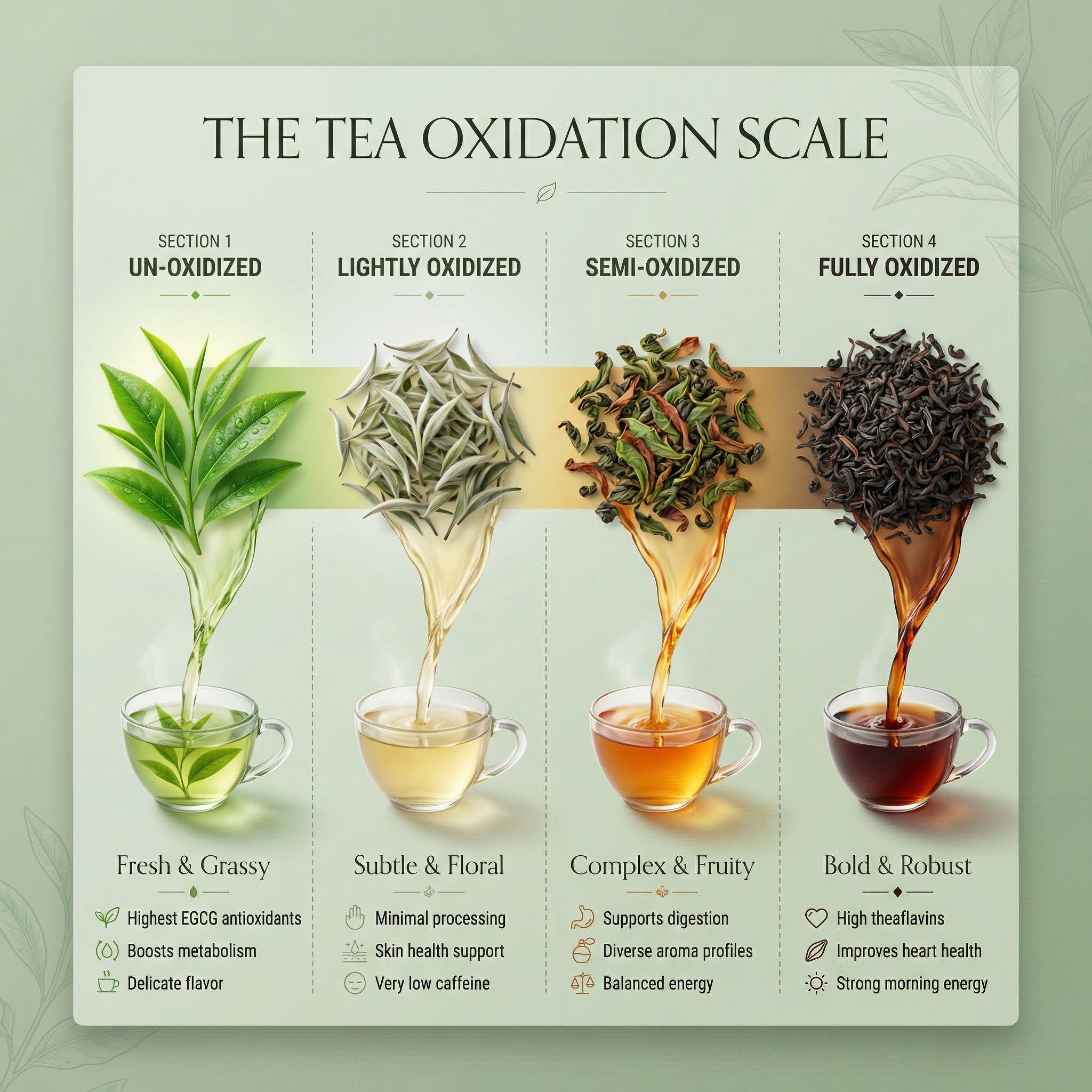
To truly appreciate your tea, it helps to know about its journey from plant to cup. This knowledge enriches each sip with a deeper understanding of what you’re tasting.
From Leaf to Cup
Tea begins its life as the Camellia sinensis leaf. This versatile plant is the source of all the classic teas you know and love. The journey from leaf to cup involves several steps that profoundly influence flavor. Each step, from plucking to drying, plays a crucial role in developing the final profile of the tea. These steps transform a simple leaf into a diverse range of teas, each with its own distinct taste and aroma. Where the plant is grown, and the amount of light it receives also play a big role in the final product.
Oxidation and Fermentation Explained
Oxidation is key in tea processing. It affects the color, flavor, and strength of the tea. For black teas like Assam and China Black, the leaves are fully oxidized, giving them their robust character. In contrast, green teas such as Sencha undergo minimal oxidation, preserving their fresh, grassy notes. Fermentation, often confused with oxidation, involves the enzymatic breakdown of compounds, further refining the tea’s flavor. Understanding these processes helps you choose the right tea for your palate.
The Impact of Oxidation on Tea Varieties
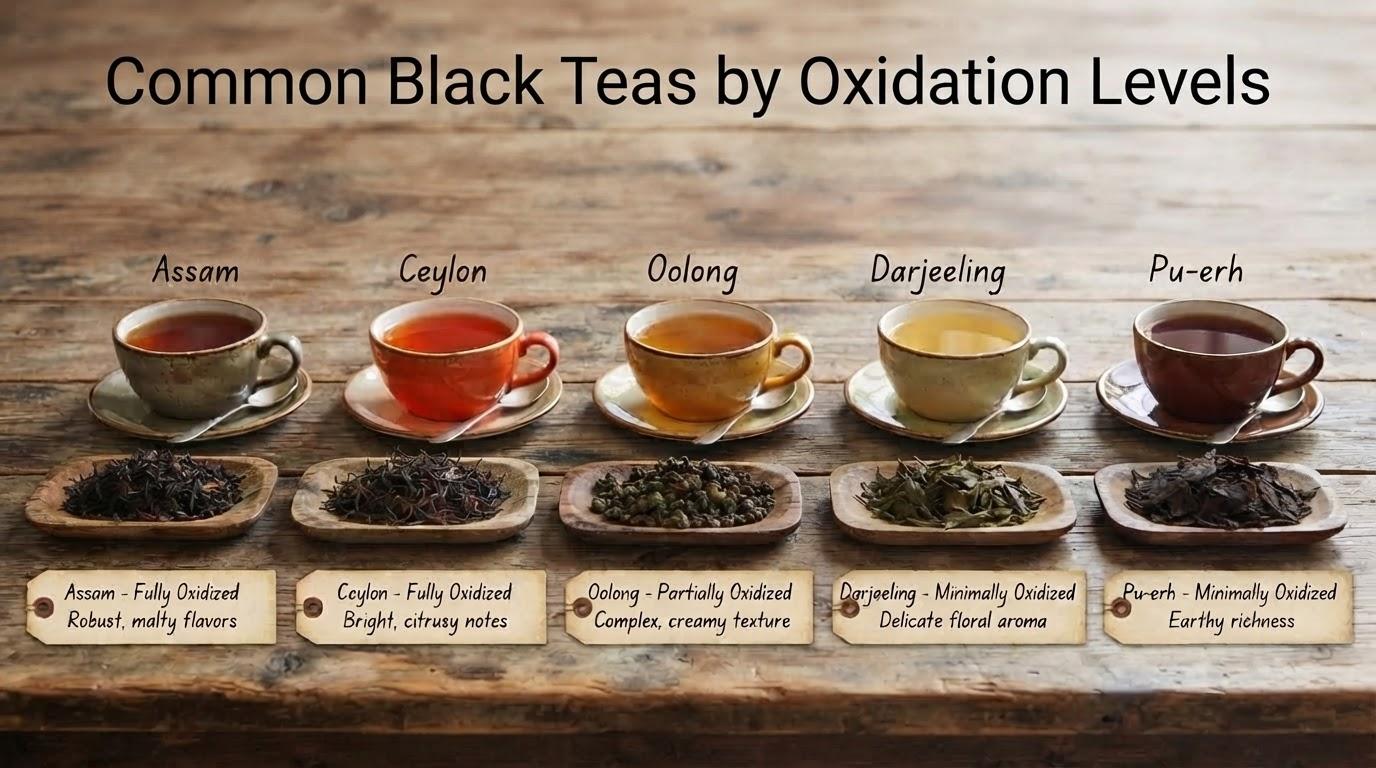
When it comes to tea, oxidation is more than just a step in the process—it’s an art form that shapes the flavor, aroma, and even the health benefits of your favorite brew. Let’s dive into how oxidation transforms each unique variety of tea: Assam, Oolong, Ceylon, Darjeeling, and Pu’erh.
Assam Tea: Bold and Invigorating
Assam tea, known for its full-bodied, malty flavor, undergoes complete oxidation. This process turns the leaves a rich, dark brown and enhances their robust, brisk profile. Perfect for those moments when you need an energizing start, Assam’s strong character is not only a delight for the taste buds but also a powerhouse of antioxidants that promote heart health and boost energy levels.
Ceylon Tea: Bright and Zesty
Hailing from the lush landscapes of Sri Lanka, Ceylon tea is fully oxidized, like Assam. With its distinctive citrusy notes, this tea is invigorating yet soothing. The bright, brisk character of Ceylon tea not only refreshes the palate but also packs polyphenols that enhance immune function and boost vitality, adding zest to your day.
Darjeeling Tea: The Champagne of Teas
Darjeeling tea, often referred to as the “Champagne of Teas,” undergoes a light to medium oxidation. This process gives rise to its delicate floral and muscatel notes, offering a sophisticated tea experience. The subtleties in its flavor profile make Darjeeling a delightful choice for contemplative sipping, while its antioxidant properties nurture your body’s ability to combat stress and promote calm.
Oolong Tea: The Perfect Balance
Oolong tea finds its charm in its partial oxidation. This tea is a wonderful cross between green and black tea, offering a complex range of flavors from floral and fruity to rich and roasted. The degree of oxidation can vary widely, resulting in a range of Oolong teas that cater to different palates. Beyond taste, Oolong supports digestion and aids in metabolic health, making it a lovely companion for your wellness journey.
Pu’erh Tea: Earthy and Transformative
Pu’erh is unique in that it undergoes a post-oxidation fermentation process, lending it a deep, earthy flavor that evolves with age. This ancient tea with its bold, almost mystical taste is revered for its digestive and cleansing properties. Regular consumption of Pu’erh supports gut health and is believed to aid in detoxification, making it a cherished ally in holistic practices.
Each of these teas tells a story of transformation, much like our own personal journeys. By understanding the intricacies of oxidation, you’re not just enjoying a cup of tea—you’re embracing a world of flavor and wellness. Let’s raise our cups to community, exploration, and the unique paths we each walk. Cheers to your health and happiness!
China Black Tea: A Legacy of Bold Flavors
China Black Tea holds a venerable position in the world of tea, originating from the lush regions of Fujian, Yunnan, and Anhui. Initially crafted during the Ming Dynasty to create a tea that would endure long journeys, this tea was made by fully oxidizing the leaves, resulting in a dark, robust brew renowned for its longevity. Cultivated in areas with ideal climate and soil conditions, China Black Tea is rich and smooth, with aromatic notes of cocoa, honey, and subtle hints of smoke, offering a refined, multi-layered flavor experience.
Unlike its more malty Assam counterpart, it captivates with gentle sweetness and “mellow depth,” balancing its flavor without overwhelming bitterness, making it a versatile tea for various occasions. Beyond its delightful taste, China Black Tea is a wellness ally, rich in antioxidants that support heart health and offer cellular protection. Its tannins promote digestion, making it comforting after meals, while its moderate caffeine content invigorates the mind, providing clarity and focus without the jitters.
As you explore China Black Tea, each sip connects you to centuries of tradition. Enjoy it on its own or blend it with floral notes like roses or spicy touches like ginger for personalized concoctions that suit your spiritual and wellness path. Let’s raise our cups to this timeless brew and savor the journey it provides!
Fermentation
Fermentation plays a fascinating role in the journey of tea, especially in the creation of unique varieties like Pu’erh tea. This process involves the enzymatic breakdown of compounds in the tea leaves, which occurs after the leaves have been carefully oxidized.
Unlike oxidation alone, fermentation adds an extra layer of complexity and depth to the tea’s flavor profile, often resulting in rich, earthy tones that evolve beautifully as the tea ages. Imagine sipping a cup of Pu’erh and feeling the connection to ancient traditions, each sip offering a unique taste of history and transformation! Whether you’re a seasoned tea enthusiast or someone just beginning to explore the world of tea, understanding fermentation might inspire you to embark on a flavorful journey all your own.
The Role of Drying in Tea
Drying is the final step in tea processing. It halts oxidation and locks in the tea’s flavor. This crucial phase ensures your tea stays fresh and flavorful until you’re ready to brew. The method of drying, whether sun-dried or machine-dried, can subtly impact the tea’s taste. Knowing how drying affects your tea can enhance your appreciation of each cup you drink.
The Wonders of Green Tea
Embark on a journey through the verdant world of green teas, where each step from leaf to cup is an art form that shapes their unique flavors and wellness benefits.
Key Steps in Green Tea Processing: An Overview
Before diving into the delightful world of green tea varieties, let’s take a moment to understand some essential steps in the green tea journey. Each step contributes significantly to the distinctive characteristics and benefits of the tea you savor.
-
Withering: This initial step involves spreading the freshly plucked leaves to reduce moisture and soften them. It primes the leaves for the subsequent steps, ensuring they are pliable enough for rolling without breaking.
-
Steaming: Unlike other teas, green tea undergoes steaming shortly after withering. This crucial process halts oxidation, locking in the leaf’s vibrant green color and fresh, grassy notes. Steaming preserves the natural antioxidants, keeping the tea’s healthful properties intact.
-
Rolling: Post-steaming, the leaves are rolled to release essential oils, enhancing the tea’s aroma and flavor. This can be done by hand or by machine, shaping the leaves into unique forms such as pearls or twists that define each green tea variety.
-
Drying: This final step ensures the leaves are completely dry, preventing spoilage and sealing in their flavors. Various drying methods, such as air-drying or pan-firing, can subtly influence the tea’s taste, adding another layer of complexity.
Understanding these steps enriches your appreciation for each cup of green tea, creating deeper connections to its soothing, healthful embrace. These foundational processes prepare you for the next section, where we’ll explore each tea variety’s unique journey from leaf to your welcoming cup!
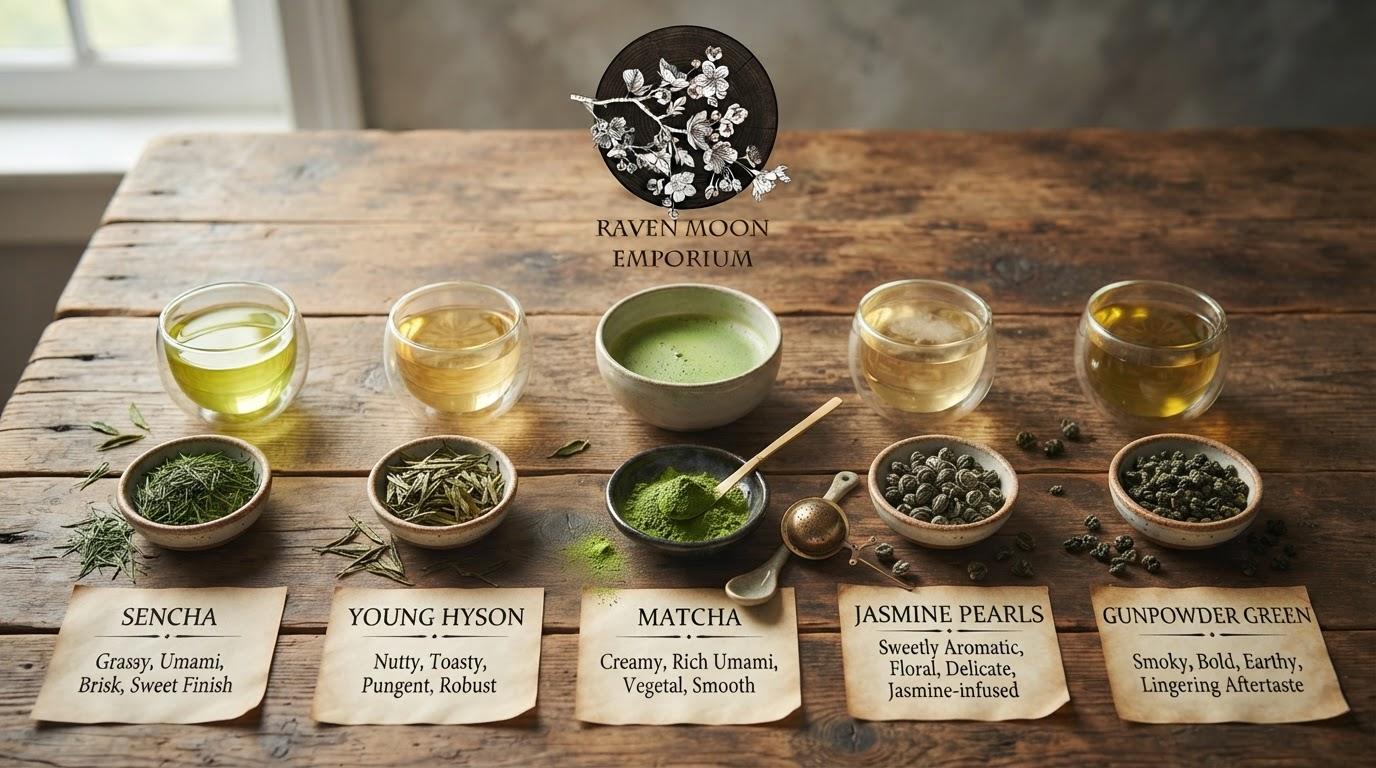
Let’s explore how these well-loved varieties are crafted: Gunpowder Green Tea, Sencha Green Tea, Jasmine Pearls, Young Hyson Tea, and Traditional Matcha. Each offers a delightful experience for your palate and a supportive embrace for your wellbeing.
Gunpowder Green Tea
-
Plucking: Young shoots are carefully hand-picked to ensure freshness.
-
Withering: Brief withering softens the leaves, preparing them for rolling.
-
Steaming: Rapidly steamed to halt oxidation, preserving the vivid green hue and fresh, grassy notes.
-
Rolling: Leaves are tightly rolled into small pellets, giving Gunpowder its characteristic shape and smoky, bold flavor.
-
Drying: Finally, dried to lock in flavors and medicinal properties, which include boosting metabolism and enhancing mental clarity.
-
Flavor Profile: Gunpowder green tea is renowned for its smoky, bold flavor and characteristic pellet-shaped leaves.
-
Medicinal Properties: It is known to boost metabolism and enhance mental clarity, offering an invigorating start to your day.
-
Traditional Regions: Gunpowder green tea is primarily grown and produced in China, particularly in Zhejiang Province.
Sencha Green Tea
-
Plucking: The top two tender leaves and buds are selected for best quality.
-
Steaming: Leaves are gently steamed to prevent oxidation, capturing a fresh, vegetal taste.
-
Rolling: Rolled into long, thin strands, which contribute to the delicate, sweet profile.
-
Drying: Finished with hot air drying, sealing in antioxidants that support immune health and vitality.
-
Flavor Profile: Sencha offers a fresh, vegetal taste with a delicate, sweet profile, making it a staple in Japanese tea culture.
-
Medicinal Properties: Rich in antioxidants, it supports immune health and provides a refreshing, energizing experience.
-
Traditional Regions: Sencha is traditionally grown and produced in Japan, particularly in Shizuoka Prefecture.
Jasmine Pearls
-
Plucking: Fine, young leaves are chosen for their softness and quality.
-
Steaming and Scenting: Repeatedly layered with fresh jasmine blossoms as they steam, infusing the tea with a sweet, floral aroma.
-
Rolling: Hand-rolled into pearls, enhancing the luxurious experience of their floral, soothing profile.
-
Drying: The drying phase solidifies the jasmine essence, providing calming and stress-relieving properties.
-
Flavor Profile: Featuring a sweet, floral aroma, Jasmine Pearls offer a luxurious, soothing experience.
-
Medicinal Properties: The calming properties provide stress relief, making it perfect for relaxation and mindfulness.
-
Traditional Regions: Jasmine Pearls are traditionally grown and produced in China, particularly in the Fujian Province, where the humid climate and fertile soil contribute to their distinctive quality.
Young Hyson Tea
-
Plucking: Leaves are picked earlier in the season when they are young and tender.
-
Steaming: This quickly halts oxidation, retaining a gentle, sweet flavor.
-
Rolling: Twisted into long, wiry shapes, offering a slightly spicy, full-bodied experience.
-
Drying: Tightly dried to capture compounds that aid in digestion and detoxification.
-
Flavor Profile: With a gentle, sweet flavor and a slightly spicy, full-bodied experience, Young Hyson captivates with its twisted, wiry form.
-
Medicinal Properties: It aids in digestion and detoxification, promoting overall wellness.
-
Traditional Regions: Young Hyson tea is traditionally grown and produced in China, particularly in the provinces of Anhui and Zhejiang, contributing to its unique flavor and quality.
Traditional Matcha
-
Shading: Tencha leaves are shaded before harvest to enhance chlorophyll, increasing the vibrant green color and amino acid content.
-
Steaming: Brief steaming to stop oxidation and maintain nutrient integrity.
-
Drying: Air-dried to preserve lightness and freshness.
-
Grinding: Stone-ground into a fine powder, allowing you to consume the whole leaf, maximize antioxidant intake, and enhance focus and calm.
-
Flavor Profile: Traditional Matcha boasts a vibrant green hue, a rich, creamy taste, and an umami finish.
-
Medicinal Properties: Consuming the whole leaf maximizes antioxidant intake, offering enhanced focus and calm, making it a popular choice for meditation and concentration.
-
Traditional Regions: Matcha is traditionally grown and produced in Japan, particularly in regions like Uji in Kyoto and Nishio in Aichi. These areas are celebrated for their ideal climate and soil conditions, contributing to Matcha’s distinctive quality and flavor.
Each type of green tea invites you to savor a meditative moment, enriching both body and spirit. As you explore these teas, remember that their journey from leaf to cup offers not just a drink but a pathway to wellness and personal growth. Join us in discovering your favorite green tea, enhancing your holistic health journey with every sip!
Exploring Flavor Profiles
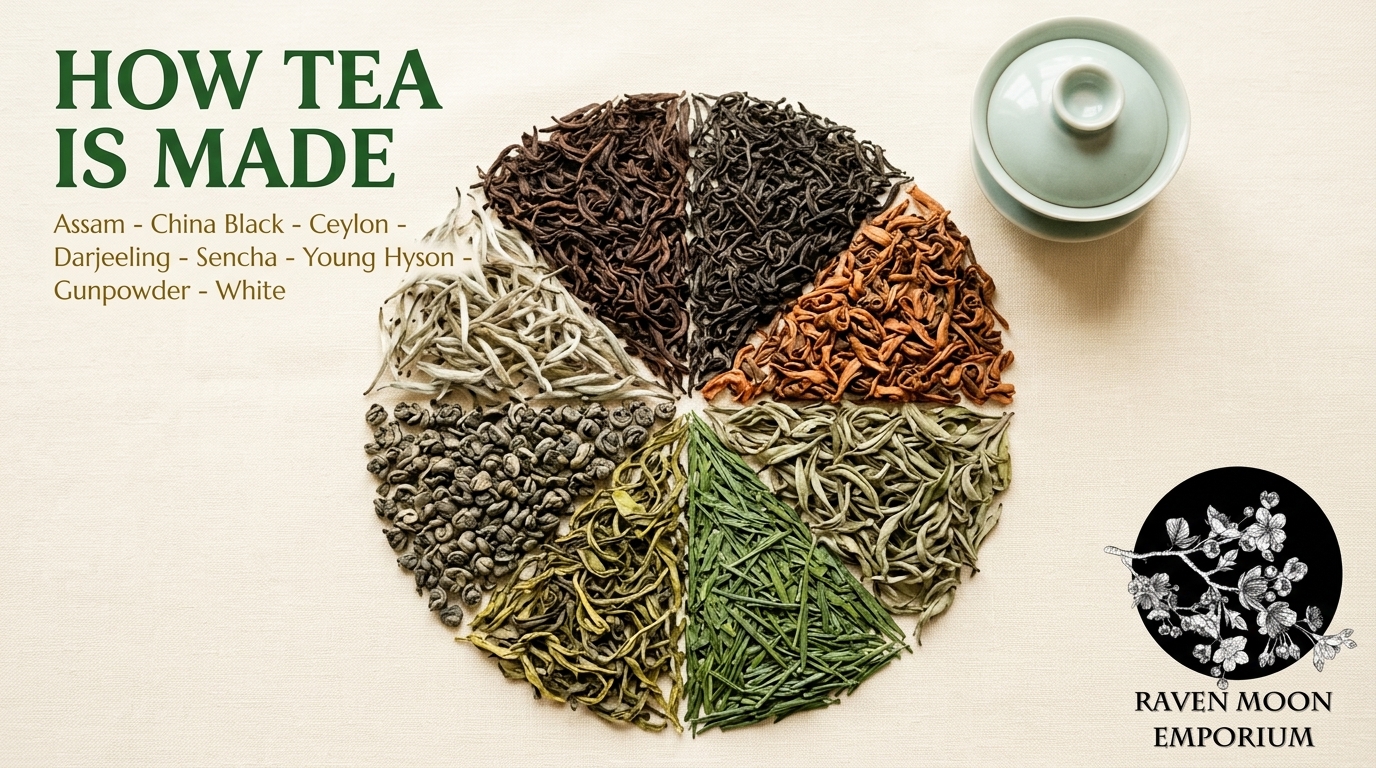
With an understanding of the processing steps, you can now explore how these steps create unique flavor profiles. Each tea offers a different experience, inviting you to discover your personal favorites.
Assam and China Black Tea
Assam tea is known for its bold, malty flavor. It’s a popular choice for breakfast blends, providing a strong, invigorating cup. The richness of Assam makes it perfect for those who enjoy a hearty brew. China Black tea, on the other hand, is often smoother, with a delicate sweetness. It offers a more refined experience, ideal for sipping slowly and savoring the intricate flavors.
Both Assam and China Black tea are excellent base teas for creating your own unique tea blends. Their distinctive flavors can be complemented beautifully by a variety of ingredients. For a warming twist, try blending Assam with dried orange peels and a sprinkle of cinnamon, bringing out a citrusy spiced aroma that brightens the robust base.
For the China Black tea, consider combining it with dried rose petals and a touch of vanilla bean. This blend creates an aromatic and soothing cup with floral notes that play wonderfully against the tea’s inherent sweetness. These recipes offer delightful variations and invite you to explore and personalize your tea experience.
Ceylon and Darjeeling Tea
Ceylon tea, hailing from Sri Lanka, is bright and brisk, with a citrusy kick. It’s a versatile tea, well-suited for iced applications in the summer months. Darjeeling, known as the “Champagne of Teas,” offers a floral, muscatel flavor. It’s a lighter option, perfect for those seeking a more subtle, aromatic experience.
Using Ceylon and Darjeeling as your base teas allows for creative and delightful blending. For a refreshing twist on Ceylon, try blending it with fresh lime slices and crushed mint leaves to make a rejuvenating iced tea that infuses each sip with a touch of the tropics. Alternatively, pair Darjeeling with dried apricot pieces and a hint of cardamom for a warm, aromatic blend that highlights its floral undertones. These blends not only offer a taste of customization but also elevate your tea-drinking experience, encouraging you to experiment and find your perfect flavor combinations.
Sencha, Young Hyson, and Gunpowder Green
Sencha green tea, with its distinctly grassy, slightly sweet taste, serves as an ideal base for crafting personalized tea blends. To create a refreshing twist, try blending Sencha with a hint of lemongrass and a few slices of ginger, infusing each sip with a burst of citrus and spice that’s perfect for rejuvenating your senses in the midday heat. Alternatively, mix Sencha with dried pineapple chunks and a dash of coconut flakes for a tropical infusion that transports you to an island getaway with every cup.
Similarly, Young Hyson green tea, known for its robust profile and subtle smokiness, can provide a hearty base for blending. Consider combining Young Hyson with roasted barley and a touch of vanilla bean to create a nutty, aromatic blend that comforts on cooler days. Or pair it with lime peel and spearmint for a refreshing iced tea that delivers a zesty, vibrant, and invigorating burst of flavor.
Gunpowder green tea offers a full-bodied, slightly peppery flavor, ideal for those who appreciate a more pronounced taste. This robust tea, with its characteristic pellet-like leaves, can become a canvas for creative infusions. Pair Gunpowder green tea with cinnamon sticks and dried apple slices for a warming, spiced apple blend that’s both comforting and energizing.
Discovering Twig Tea
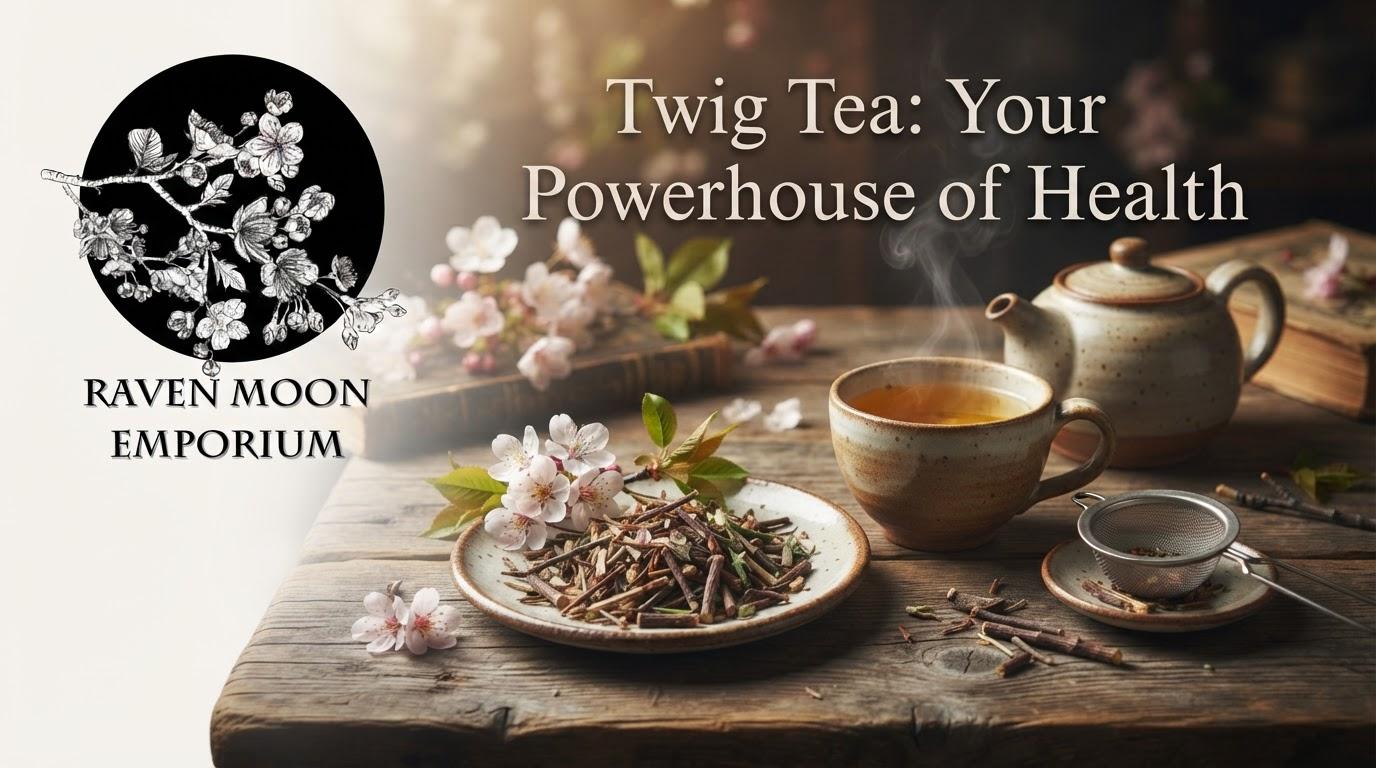
Twig tea, often referred to as Kukicha, is a delightful yet understated variety of tea that offers a break from the more commonly known teas. Let’s dive into what makes Twig tea unique, how it’s made, and its flavor profile and health benefits!
How It’s Made
Twig tea is traditionally crafted using the twigs and stems of the Camellia sinensis plant, the same plant that gives us black, green, and white teas. The use of twigs might seem unusual, but this technique adds a distinct richness to the tea. Here’s how it’s created:
-
Harvesting: Twigs and stems are harvested alongside tea leaves.
-
Aging: Once gathered, the twigs are aged for several years, allowing the flavors to mature and deepen.
-
Roasting: Following aging, the twigs are lightly roasted. This process imparts a wonderfully nutty aroma, further enhancing the tea’s character.
-
Brewing: When it’s time to brew, the tea offers a beautifully toasty experience that’s both comforting and invigorating.
Flavor Profile
Twig tea captivates with its smooth, roasted, and sometimes slightly sweet taste. The roasting process gives it a nutty, almost caramel-like flavor that can be a comforting delight to sip on any day. This unique profile makes it an excellent choice for those who enjoy a mellower, less astringent tea experience.
Health Benefits
Twig tea is not just a treat for the senses; it’s also known for its soothing health benefits:
-
Low in Caffeine: Because it is made primarily from twigs and stems, Kukicha contains less caffeine than regular leaf teas. It’s a perfect option if you’re seeking a calming cup without the jitters.
-
Rich in Antioxidants: Like other teas, Twig tea is rich in antioxidants that support overall health by combating free radicals.
-
Mineral Content: Kukicha is reputed for having a higher mineral content, offering a boost of calcium that benefits bone health.
-
Alkalizing Properties: Twig tea can help balance your body’s pH levels, promoting an alkaline environment that supports health and vitality.
Embark on a flavorful discovery with Twig tea and enjoy its warm, toasty embrace. Whether you’re a seasoned tea lover or new to holistic wellness, Twig tea offers a gentle path to exploring the rich tapestry of tea culture.
Try blending Twig tea with toasted sesame seeds and honey for a sweet-savory concoction that delights the palate, or combine it with dried apricots and a touch of fennel for a subtly sweet, aromatic brew. These blending suggestions invite you to explore the nuanced characters of these teas, encouraging a deeper connection to your personal flavor preferences.
White Tea
Exploring White Tea
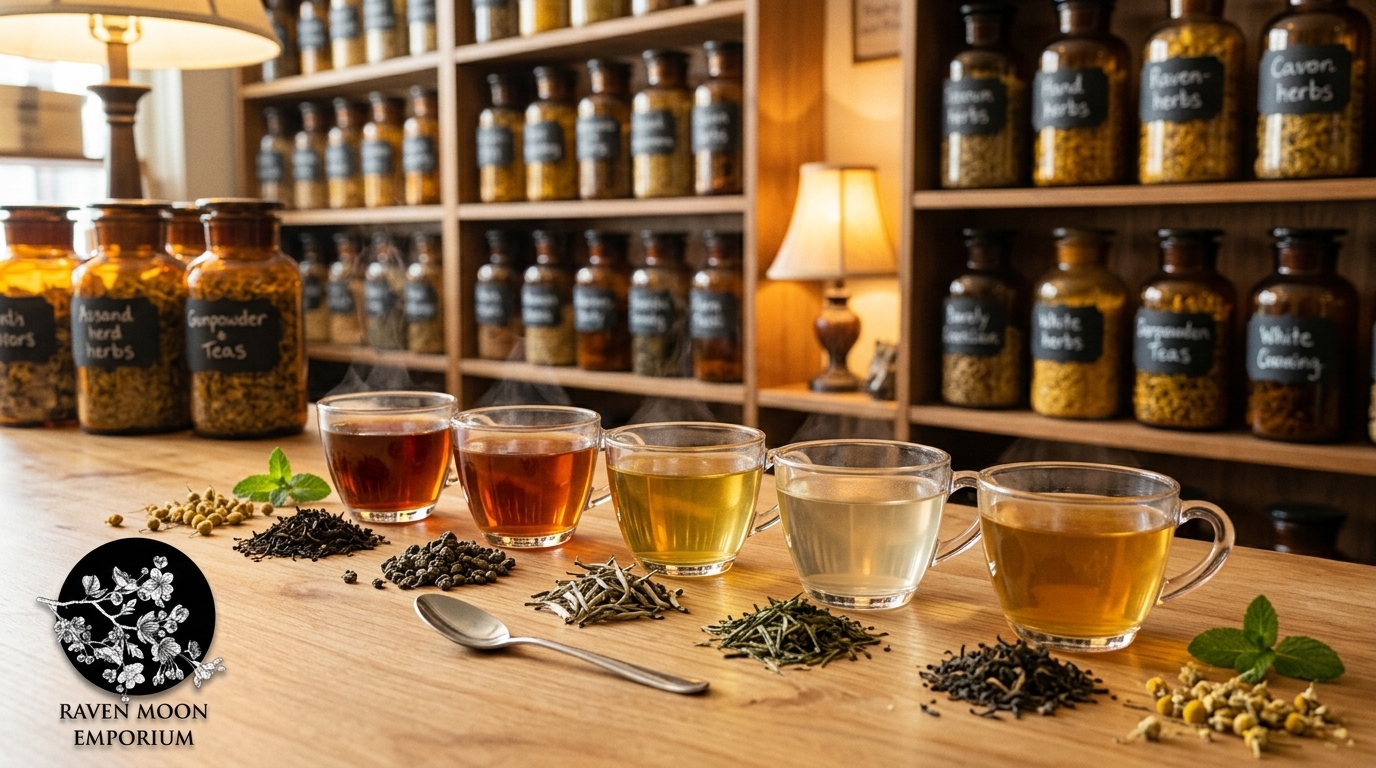
White tea, enjoyed for its subtlety and smoothness, has a rich history that dates back to the Tang Dynasty in China. Traditionally, white tea was considered a delicacy reserved for royalty due to its unique processing method that captures the essence of the leaf at its freshest.
The production of white tea involves minimal processing. The young buds and leaves are hand-picked before undergoing natural withering and drying in the sun, thereby retaining their delicate flavors and high antioxidant content. Unlike green and black teas, white tea is neither rolled nor oxidized, preserving its natural sweetness and pale color.
Predominantly produced in the Fujian Province of China, white tea is now also cultivated in regions like India and Sri Lanka, where the climate replicates the cool and misty conditions ideal for harvesting the finest quality.
Drinking White Tea
The health benefits of white tea are plentiful. It is rich in antioxidants, which support skin health, boost heart function, and aid in weight management. Its gentle processing method helps maintain high levels of polyphenols, contributing to its reputation as a refreshing and healthful beverage.
For a personalized tea experience, consider pairing white tea with complementary flavors that enhance its delicate nature. Incorporate slices of cucumber or a handful of fresh berries to create a refreshing, fruity infusion. Alternatively, add a sprig of rosemary or thyme for a subtle herbal undertone. Each pairing offers a new dimension to the tea’s natural profile, inviting you to explore and craft a brew that’s uniquely yours.
Frequently Asked Questions
What is the best way to store tea to maintain its freshness?
Tea should be stored in an airtight container away from light, heat, and moisture. This helps preserve its flavor and aroma for longer.
Can I reuse tea leaves for multiple infusions?
Yes, many teas, especially high-quality ones, can be steeped multiple times. Each infusion may bring out different flavor notes.
Is there a difference between oxidation and fermentation in tea processing?
Yes, oxidation involves exposure to air, which affects color and flavor, while fermentation involves enzymatic breakdown, further refining the tea’s taste.
How does white tea differ from green tea in processing?
White tea undergoes minimal processing and no oxidation, resulting in a lighter flavor, while green tea is slightly oxidized, giving it a fresh, grassy taste.
Can herbal pairings alter the health benefits of tea?
Herbal pairings can complement and enhance the benefits of tea, offering additional wellness properties depending on the herbs used.