Arnica is available for purchase from many different websites, including Raven Moon Emporium. However, it’s crucial to realize that two entirely distinct plants are marketed under the name “Arnica,” and the price differences are substantial. Understanding the differences between these two botanicals will empower you to make a confident choice.

Understanding Arnica
Science is vital! When purchasing Arnica, insist on seeing the scientific name. If it is “Arnica Montana,” you’re dealing with European Arnica. Alternatively, if it reads “Heterotheca inuloides,” it indicates Mexican Arnica.
Although both plants share similar yellow, daisy-like flowers and are used topically for bruises and inflammation, Mexican Arnica is entirely distinct from true European Arnica and possesses a different chemical profile.
About European Arnica
European Arnica (Arnica montana) is a potent herb known for its anti-inflammatory and pain-relieving properties. It’s great for treating bruises, sprains, and osteoarthritis. It contains compounds like helenalin, which help reduce bruising, swelling, and muscle pain. When used on the skin, it is often compared to drugs like ibuprofen. The infused oil is a perfect way to use this type of Arnica as it penetrates the skin deeply and quickly.
Arnica, in its pure form, is very toxic if swallowed and can irritate if used on broken skin. It’s only safe for external use or in very diluted homeopathic forms. Seen as a mainstay of plant-based therapy in Europe and the U.S., it’s usually sold as creams, gels, oils, and homeopathic tablets to treat sports injuries and muscle pain. Arnica montana is often up to 10 times pricier than Mexican Arnica, which can help you figure out which kind you have.
About Mexican Arnica
Mexican Arnica, Heterotheca inuloides, is a plant native to Mexico and the American Southwest, known for its anti-inflammatory and pain-relieving properties. It is less potent than European Arnica, with some studies showing European Arnica is up to 10 times more effective at reducing inflammation. The benefits of Mexican Arnica are that, due to its lower toxicity, it can be used internally and is commonly used in traditional Mexican medicine to make teas.
Mexican Arnica tends to be the default Arnica in many herbal stores. Although it can be applied similarly to European Arnica (Arnica montana), Mexican Arnica comes from a different plant in the daisy family and is often made into tea. Speak to a qualified herbalist before ingesting it as tea, as it can be toxic and cause stomach or heart issues. If they do not give you a scientific name and it is priced under $30/lb, you can bet you are looking at Mexican Arnica.
Integrating Arnica Into Wellness
Adding Arnica to your routine is easy and helpful. Use it after physical activities when needed. Keep Arnica products in your gym bag or bathroom cabinet for easy access. This way, you’re ready to handle any discomfort that comes up.
Arnica Types and When to Use Them
Now that we understand the benefits, let’s look at the different forms of arnica and when to use each.
When to reach for Anica Montana
Choose Arnica montana for quick relief from bruising, swelling, and sore muscles. It’s ideal for strains, sprains, joint pain, post-surgery bruising, and sudden soft tissue injuries (as long as the skin isn’t broken). This type of Arnica is very effective at reducing inflammation and helps move stagnant blood. Use concentrated gels, ointments, oils, or tinctures only on unbroken skin. Swallowing Arnica montana can be harmful, so oral use should be limited to highly diluted homeopathic forms.
When to reach for Mexican Arnica
Choose Mexican Arnica, Heterotheca inuloides, if you’re looking for an anti-aging skin treatment, prefer remedies you can ingest (like traditional teas), or desire a milder, less toxic alternative for localized pain. Topical oils from Mexican Arnica can be excellent for anti-aging skincare, addressing fungal/bacterial skin issues, and alleviating mild muscle soreness. While it shares similar medicinal qualities with European Arnica, it has a more tempered active profile, making it a gentler option. Its significantly lower toxicity than Arnica montana allows traditional folk medicine practitioners to use it safely in tea form.
Arnica Pellets Explained
Arnica pellets offer a homeopathic way to support internal healing. They are easy to use—dissolve them under your tongue as directed. These pellets can boost topical treatments, giving a well-rounded approach to wellness. If you want extra support beyond using creams or gels, try arnica pellets. These homeopathic pellets are always made with Arnica Montana.
Each tube usually has a number and a letter (e.g., Arnica Montana 30C or Arnica Montana 6X). The number shows how many times it has been diluted, and the letter shows the dilution method. Because they are highly diluted, homeopathic pellets are safe to take by mouth and help with body-wide bruising, swelling, and muscle soreness.
On the label, “C” indicates a more diluted medicine. Strangely, in homeopathy, higher numbers mean a stronger potency, better for severe symptoms.
-
Arnica Montana 30C (High Potency): Best for sudden, serious injuries. Use 30C right after dental surgery, a hard fall, a sprain, or sudden muscle shock.
-
Arnica Montana 6C (Low Potency): Best for mild or ongoing issues. Use 6C for lingering soreness from exercise, minor arthritis pain, or slow-healing small bruises.

Visual Comparison: Arnica Montana vs Mexican Arnica
Here’s a picture showing the differences between Arnica montana and Heterotheca inuloides (Mexican Arnica). This will help you to tell them apart easily.
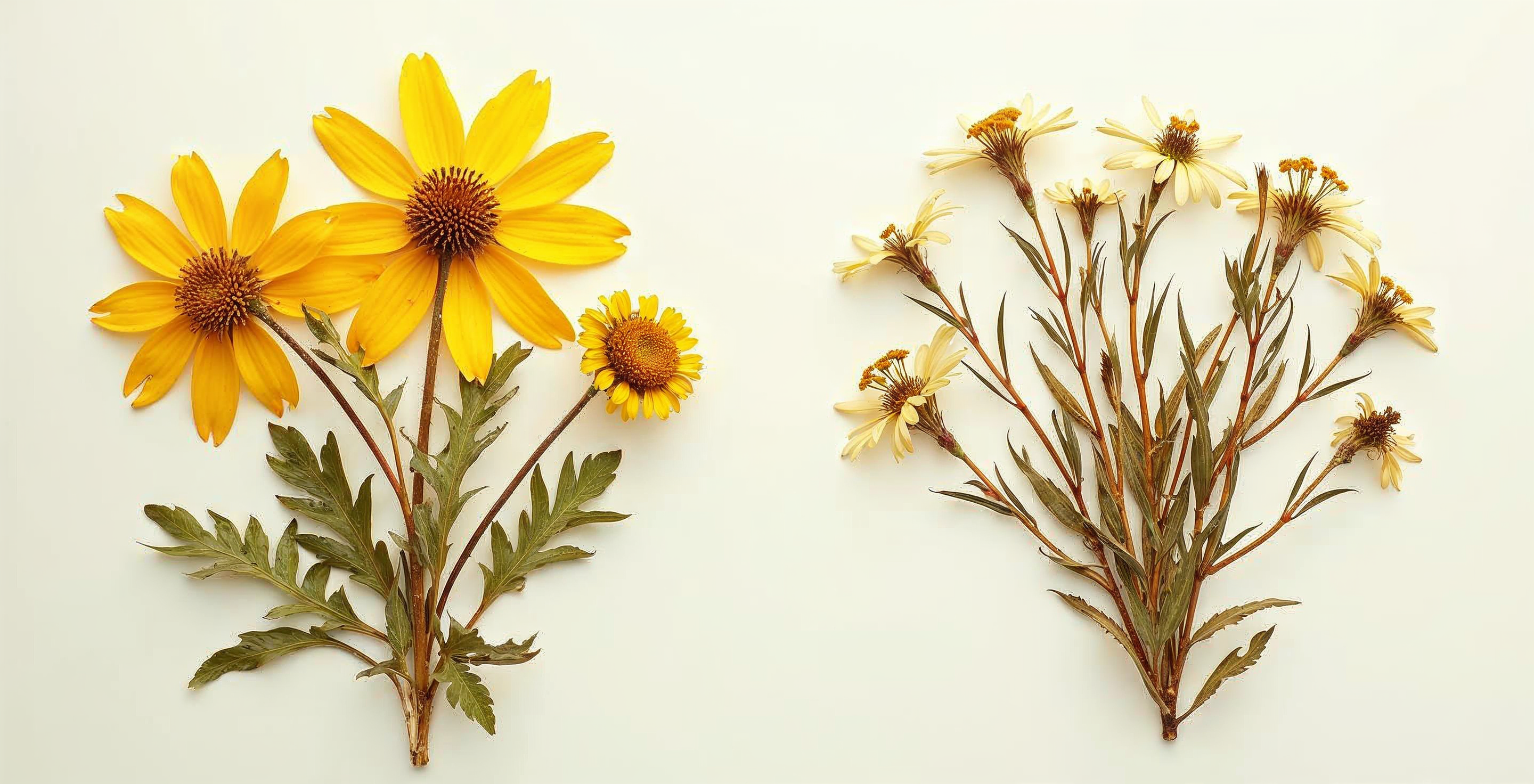
Key Differences Illustrated:
-
Botanical Names:
-
Arnica montana (European origin)
-
Heterotheca inuloides (Mexican origin)
-
-
Size & Appearance:
-
Arnica montana has larger, more distinct yellow flowers resembling daisies.
-
Heterotheca inuloides has smaller, less bright blooms.
-
-
Chemical Composition:
-
Arnica montana contains strong compounds called sesquiterpene lactones.
-
Heterotheca inuloides has different, gentler compounds.
-
-
Usage & Potency:
-
Arnica montana is commonly used in creams and gels for bruises and swelling.
-
Heterotheca inuloides is often used in traditional teas but is less effective in creams.
-
This illustration serves as a quick reference to distinguish these two commonly confused plants. Make sure you know which one you are using to ensure the desired therapeutic benefits!