Choosing the right herbal form can feel overwhelming when you see so many options on the shelf. Herbal tea, tinctures, glycerites, infused oils, and essential oils all carry plants in unique ways, each with different strengths and uses. Let’s explore how to read potency and choose with confidence!
Visit Raven Moon Emporium for more information about individual plant medicinals.
Understanding Herbal Forms
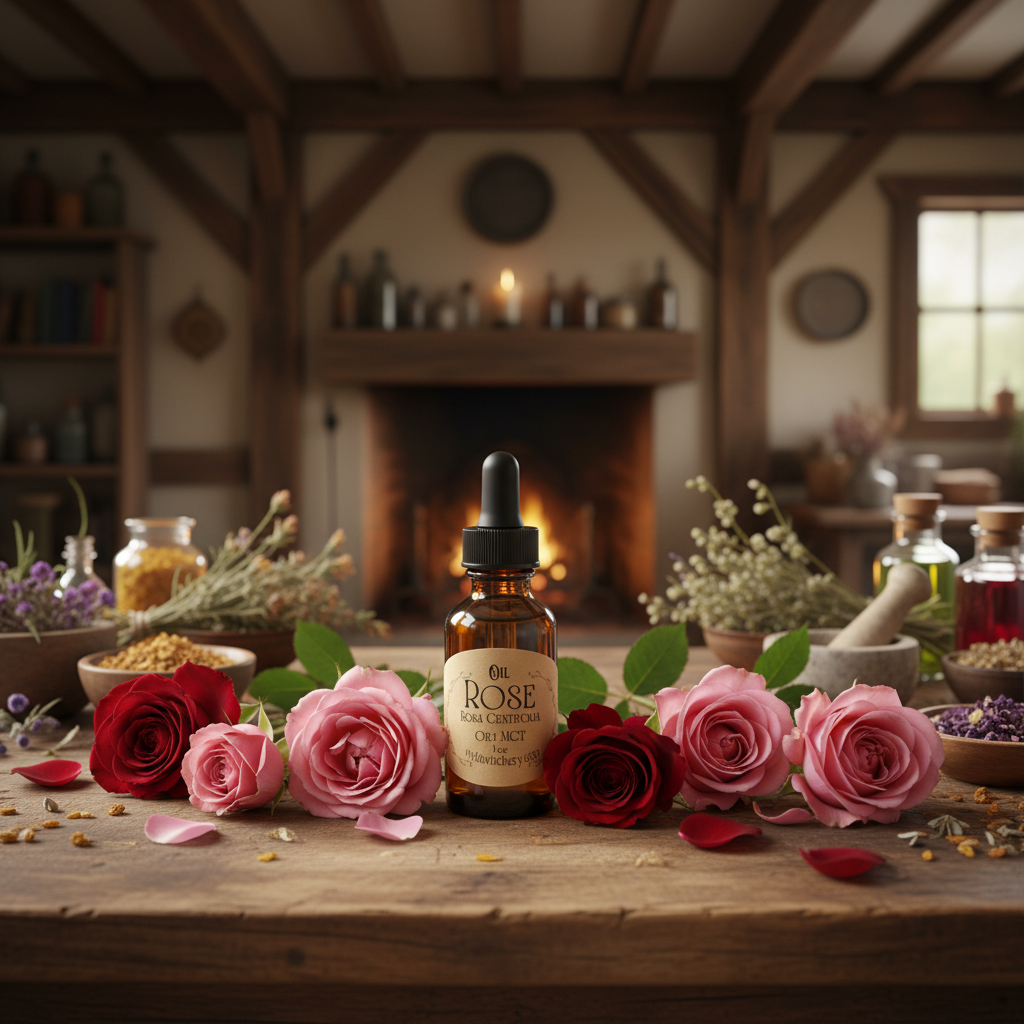
When exploring herbs, you’ll notice they come in various forms, each offering unique benefits. Understanding these can help you make the right choice for your needs.
Herbal Tea vs Tincture
Herbal teas are a gentle introduction to herbs, offering soothing flavors and mild effects. They’re perfect for daily rituals and moments of relaxation. On the other hand, tinctures provide a concentrated form of herbs, usually extracted with alcohol. This method preserves the herb’s properties in a compact form, ideal for quick, potent doses. Use herbal tea for a calming drink and tinctures for a stronger, more concentrated herbal intake.
What is a Glycerite?
Glycerites are the sweet alternative to tinctures. Instead of alcohol, these herbal extracts use vegetable glycerin, making them suitable for those avoiding alcohol. They offer a gentler approach while preserving the herb’s essence. If you seek an alcohol-free option with a touch of sweetness, glycerites might be your best choice. They are also an excellent option for sweetening tea, so you can double the benefit of each herb, or even add an herbal medicinal to a tea you really enjoy.
Herbal Infused Oil Uses
Infused oils are perfect for topical applications, capturing the essence of herbs in a carrier oil. These oils are ideal for skincare, massages, or as a base for creating salves. Infused oils offer a way to experience herbs through your skin rather than ingestion. They are a great choice for those looking to incorporate herbs into their skincare routine.
Potency Levels and Safety
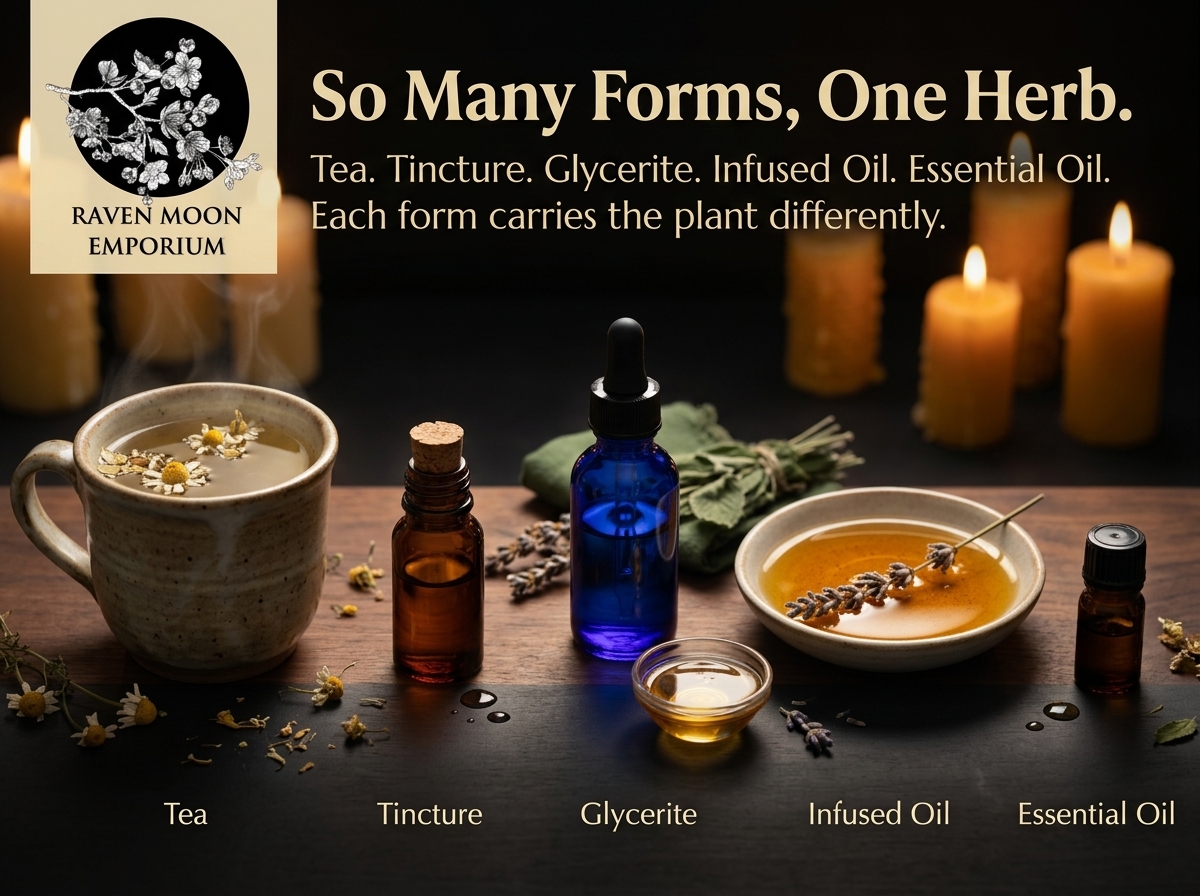
Understanding the potency levels in herbal forms is crucial for safe and effective use.
Tincture Drops: How to Use
Tincture drops are potent, so starting with a small dose is wise. Typically, a few drops under the tongue or in water are sufficient. Adjust based on your body’s response. Always follow guidelines or consult a professional to ensure safe usage.
Essential Oils vs. Infused Oils
When exploring herbal oils, two common forms you’ll encounter are essential oils and infused oils. Both have unique properties and uses, making them suitable for different applications.
Essential Oils are highly concentrated extracts obtained through distillation, capturing the volatile aromatic compounds of plants. These oils are potent and primarily used in aromatherapy to support emotional and mental well-being. Due to their concentration, essential oils should always be used with caution; they must be diluted with a carrier oil before applying to the skin to prevent irritation. Essential oils are not intended for internal use, as their potency can be harmful if ingested. Essential oils only capture the volatile oils in plant matter, so they don’t necessarily carry the full medicinal benefits of the plant in the oil.
Infused Oils, on the other hand, are created by soaking plant material in a carrier oil, absorbing both the plant’s oily and water-soluble components. This process captures the essence of the herb in a milder form compared to essential oils. Infused oils are ideal for topical applications, such as massages, skincare, and the creation of salves. They can also carry more of the plant’s full spectrum of benefits, providing a gentle and nourishing experience when applied to the skin. Infused oils carry both the volatile elements of the plant and the other medicinal properties, which makes them a more well-rounded choice for medicinal use.
In summary, if you’re looking for a powerful aromatic experience, essential oils are your go-to choice. In contrast, infused oils offer a versatile way to incorporate herbs into your skincare and body care routines.
Essential Oil Safety Tips
Essential oils are highly concentrated and should be used with care. Avoid ingesting them and always dilute before applying to skin. A little goes a long way, so use sparingly. Essential oils are best for aromatherapy or diluted topical applications.
Potency Levels in Herbs
Herbs vary in potency depending on their form. Teas offer the mildest experience, while essential oils are highly concentrated. Understanding these levels helps you choose the right form for your needs. Always read labels to gauge the strength and potential effects.
Choosing the Right Herbal Form
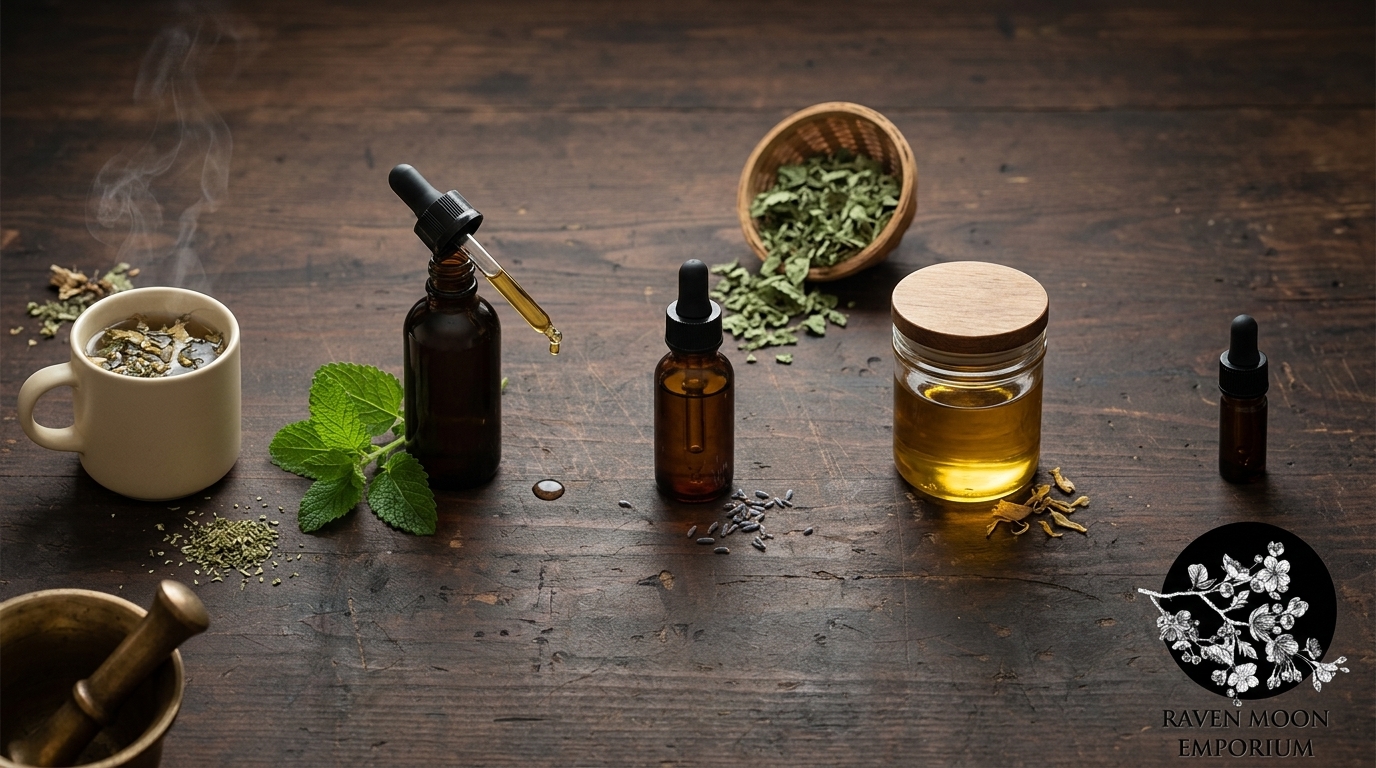
Selecting the right herbal form involves understanding extraction methods and personal preferences.
Herbal Extraction Methods
Different methods capture the essence of herbs in unique ways. From soaking in hot water for teas to alcohol or glycerin extraction for tinctures and glycerites, each method offers distinct benefits. Knowing these can guide your choice based on taste and potency preferences.
Alcohol-Free Herbal Extract Options
For those seeking alcohol-free options, glycerites and infused oils are excellent choices. They provide a way to enjoy herbs without alcohol, catering to different lifestyle needs. These options ensure everyone can find a suitable herbal form.
Aromatherapy Basics and Uses
Aromatherapy uses the power of scent to influence mood and well-being. Essential oils play a significant role here, offering therapeutic aromas when diffused. This method is perfect for those looking to enhance their environment with herbal scents.
Frequently Asked Questions
What is the difference between herbal tea and tinctures?
Herbal teas are brewed in hot water and offer a gentle herbal experience, while tinctures are concentrated herbal extracts made with alcohol, providing a stronger effect.
How do I use tincture drops safely?
Start with a small dose, typically a few drops under the tongue or in water. Adjust based on your body’s response and consult a professional if needed.
Can essential oils be ingested?
No, essential oils are highly concentrated and should not be ingested. They are best used for aromatherapy or diluted topical applications.
What are glycerites, and how are they different from tinctures?
Glycerites are herbal extracts made with vegetable glycerin instead of alcohol, offering an alcohol-free alternative with a sweet taste.
How do I choose the right herbal form for my needs?
Consider your preference for taste, potency, and method of use. Herbal teas are mild, tinctures are potent, glycerites are alcohol-free, infused oils are for topical use, and essential oils are for aromatherapy.